Part of the The Complete Guide to Flies: Identification, Prevention & Elimination guide.
You don't need a trip to the hardware store to start catching flies. A glass jar, a bait matched to the fly species you're targeting, and five minutes of setup time will outperform many commercial products — if you understand which bait attracts which fly and how to configure the trap so flies enter easily but can't get back out. These are not folk remedies; they are applications of the same attractant chemistry that commercial fly trap manufacturers use.
For a comprehensive overview, see our Complete Guide to Flies.
Why Jar Traps Work
Flies locate food and breeding sites primarily through smell. Their antennae carry chemoreceptors sensitive to specific volatile compounds — the fermentation odors of overripe fruit, the protein breakdown compounds of decomposing meat, the acetic acid of vinegar. A jar trap works by concentrating these odors to create an attractant plume, then using geometry to trap flies that enter to investigate.
The effectiveness of any jar trap depends on three factors:
- Bait specificity: The attractant must match the olfactory targets of the fly species you're trying to catch
- Entry design: Flies need to enter easily, but the exit path must be non-obvious — flies fly upward when disturbed and won't find a small downward-facing hole
- Trap maintenance: Baits lose potency as they age and should be refreshed regularly
Commercial fly traps in bags and buckets use manufactured versions of these same chemistry principles. The jar trap versions work on the same mechanism with household materials.
Trap 1: Apple Cider Vinegar Jar Trap (For Fruit Flies)
This is the most effective household trap for fruit flies (Drosophila melanogaster) and the method underlying our detailed guide to the apple cider vinegar fly trap. The acetic acid and fermentation esters in apple cider vinegar closely mimic the odor of fermenting fruit — the primary food source and breeding substrate for fruit flies.
Materials:
- 1 glass jar (pint or quart size)
- Apple cider vinegar (raw, unfiltered works best — the "mother" increases odor complexity)
- 1 to 2 drops of liquid dish soap
- Plastic wrap or a paper funnel
- Rubber band (if using plastic wrap)
Instructions:
- Pour apple cider vinegar into the jar to about 1 inch depth
- Add 1 to 2 drops of dish soap and swirl gently — the soap breaks surface tension so flies can't stand on the liquid surface and escape
- Option A — Plastic wrap lid: Stretch plastic wrap tightly across the jar mouth and secure with a rubber band. Poke 5 to 8 small holes (pencil-tip size) through the plastic with a toothpick. Holes are large enough for fruit flies to enter but small enough that escaping is difficult
- Option B — Paper funnel: Roll a sheet of paper into a funnel shape and insert it into the jar mouth, tip pointing down. Tape the seam. Fruit flies fly toward the vinegar odor, enter the funnel, and cannot navigate back up through the narrow cone
Placement: Position traps near the source of the fruit fly problem — next to the fruit bowl, near the compost bin, or on the counter beside the sink. Replace the bait every 5 to 7 days or when it loses obvious odor.
Trap 2: Sugar-Water Funnel Trap (For House Flies)
House flies (Musca domestica) are less attracted to vinegar than to the odor of fermenting sugars combined with protein breakdown compounds. A sugar-water bait with a small amount of protein catalyst draws house flies effectively.
Materials:
- 1 wide-mouth glass jar (quart size works well)
- 1/4 cup sugar
- 1 cup warm water
- 1 tablespoon white vinegar
- 1 tablespoon dish soap (optional but improves catch rate)
- A small piece of ripe or slightly overripe fruit (banana peel, mango skin, melon rind)
- Paper or plastic funnel
Instructions:
- Dissolve the sugar in warm water in the jar
- Add vinegar and drop in the fruit scrap — this adds fermentation odor and protein cues that house flies respond to
- Add dish soap if desired
- Insert the paper funnel into the jar mouth, tip pointing down, and tape the seam so flies cannot escape around the edges
- Ensure the funnel tip is at least 1 inch above the liquid surface — flies that enter should have room to mill around before contacting the liquid
Placement: Outdoors near garbage storage areas, compost bins, or known fly congregating spots. House flies forage outdoors; this trap works best when positioned where flies are already active, not indoors where fly counts are lower. Replace bait every 5 to 7 days.
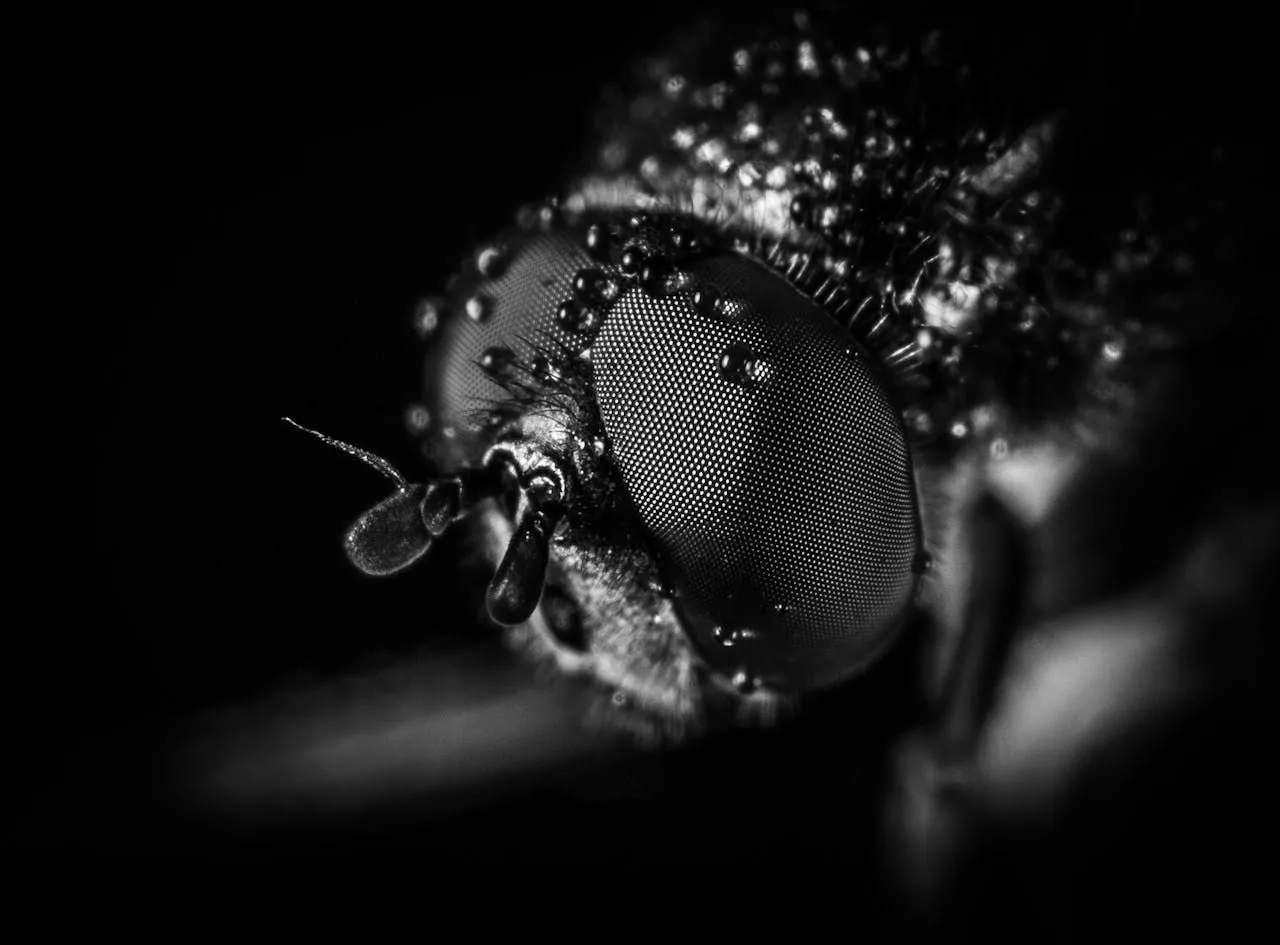
Trap 3: Raw Meat or Fish Bait Trap (For Blow Flies)
Blow flies — including green bottle flies and blue bottle flies — are attracted to protein in early stages of decomposition. They are the first insects to arrive at carrion in nature, and their olfactory system is finely tuned to the volatile compounds produced by decomposing protein. A jar trap baited with a small amount of raw meat or fish will attract and capture blow flies that are foraging outdoors around your garbage or compost.
Materials:
- 1 wide-mouth glass jar
- Small piece of raw meat or fish (chicken scraps, fish skin, or similar)
- Paper funnel
- Tape
Instructions:
- Place the raw meat or fish in the jar
- If using in warm weather, the bait will begin attracting flies within hours as it starts to decompose — this is intentional
- Insert the paper funnel, tip pointing down, and seal the edges with tape
- Set outdoors near the area where blow flies are active
Important notes: This trap produces odor. Position it well away from outdoor seating and dining areas — 20 to 30 feet upwind is appropriate. Do not use this trap indoors. Replace every 5 to 7 days or when full of captured flies.
Bait-to-Species Match Reference
| Target Fly Species | Most Effective Bait | Least Effective Bait |
|---|---|---|
| Fruit fly (Drosophila) | Apple cider vinegar, overripe fruit | Raw meat, plain water |
| House fly (Musca domestica) | Sugar water + fruit scraps, molasses | Vinegar alone |
| Blow flies (Calliphoridae) | Raw meat, fish scraps | Vinegar, sugar water |
| Drain flies (Psychodidae) | Organic drain slime (trap at drain opening) | Vinegar, meat |
| Fungus gnats | Apple cider vinegar (less effective than for fruit flies) | Meat, sugar water |
Placement Tips That Make a Difference
Where you place a jar trap has as much impact on catch rate as what is in it.
- Indoors for fruit flies: Place traps as close as possible to the breeding source — usually within 1 to 2 feet of overripe fruit, a fermenting drain, or a recycling bin with residual juice. Fruit flies rarely travel far from breeding sites
- Outdoors for house flies and blow flies: Position traps 20 to 30 feet from the area you want to protect, upwind of that area. You are drawing flies toward the trap and away from you, so the trap must be positioned between the flies' foraging area and your protected space
- Height: Most flies forage at 2 to 4 feet above ground — positioning traps at this height improves catch rates compared to traps placed on the ground
- Sun exposure: Warmth increases the volatility of bait compounds and extends the odor plume. Traps in direct sun work better than those in shade for most baits, though vinegar traps for fruit flies also work well indoors at room temperature
When Jar Traps Are Not Enough
Jar traps reduce adult fly populations in the trap's vicinity, but they do not address the breeding source. If you have a persistent fruit fly problem despite running multiple vinegar traps, the breeding source — a fermenting drain, a piece of forgotten produce, a moist garbage bin residue — is sustaining the population faster than the traps can catch adults. Our DIY fly traps guide covers complementary approaches, and fly traps covers when commercial traps are more appropriate than DIY versions.
In my 15 years of pest management in central Florida, the single most common jar trap failure I see is incorrect bait selection. A homeowner struggling with fruit flies sets out a meat-baited trap they read about online — and catches nothing, because fruit flies are not attracted to protein. Match the bait to the species, place the trap near the source, and replace it on schedule. Those three things done right outperform more elaborate setups done without attention to fly biology.
How to Identify
Identifying the fly species before baiting determines whether the jar trap will catch anything. Fruit flies are 3--4 mm with bright red eyes and a tan body; they hover slowly around overripe produce, vinegar, wine residue, and drain openings. Apple cider vinegar is the correct bait. House flies are 6--7 mm, gray with four dark thoracic stripes; they land frequently on food, waste, and surfaces throughout the room. Sugar-water with a fruit scrap draws them; vinegar alone is significantly less effective.
Blow flies are 8--12 mm, metallic green or blue, and buzz loudly. They are drawn to decomposing protein; raw meat or fish bait is required. Drain flies are 2--5 mm with fuzzy moth-like wings and rest motionless on walls near drain openings. Standard jar traps are ineffective; the biofilm in the drain must be treated directly. Fungus gnats are slender and dark with long legs; yellow sticky traps near plant soil outperform jar traps for this species.
Risk and Severity
The flies most efficiently caught by jar traps carry health risks that justify the effort. House flies mechanically transmit over 100 pathogens including Salmonella, E. coli, and cholera from contaminated surfaces to food. Their transmission is direct: bacteria on feet and mouthparts deposit onto any food surface they contact.
Blow flies arriving indoors in significant numbers almost always indicate a dead animal or unsecured meat waste in or near the structure. They carry Staphylococcus and Pseudomonas species in addition to gastrointestinal pathogens.
Fruit flies present a lower acute health risk but can contaminate food with E. coli, particularly in commercial food service settings where minor contamination has regulatory consequences.
Solutions and Actions
Set jar traps in the first 24--48 hours of detecting a problem to begin reducing the adult population while you locate and remove the breeding source. Position vinegar traps for fruit flies within 1--2 feet of the source. Position sugar-water traps for house flies outdoors near garbage storage, 20--30 feet from doors to draw flies away from entry points.
Replace bait every 5--7 days. Run two or three vinegar traps simultaneously in different kitchen locations during a fruit fly infestation to increase catch efficiency and identify which zone has the highest fly pressure.
Prevention
Jar traps reduce existing populations but do not prevent new infestations. Prevention requires eliminating what draws each species. For fruit flies: refrigerate ripe produce, rinse recycling containers, empty compost daily, and clean drains monthly with enzymatic cleaner. For house flies: remove garbage daily, use lidded outdoor bins, collect pet waste within 24 hours, and maintain intact screens on all windows and doors.
Once an infestation is resolved, a single passive vinegar trap left in the kitchen provides early-warning monitoring. A sudden increase in catch rate signals a new source before populations become visible.
Main Causes
Indoor flies activity is driven by accessible breeding material and warmth. House flies and blow flies breed in garbage, pet waste, compost, and dead animals; fruit flies breed in overripe produce, drain biofilm, fermenting liquids, and unrinsed recycling; drain flies breed in the gelatinous film inside infrequently used drains; phorid flies breed in broken sewer lines and decomposing material under slabs. Adults find their way inside through torn screens, gaps around doors, vents, and any opening to the outside. Warm weather accelerates the entire life cycle, and a sustained population always points to an unaddressed source either inside the structure or close enough that adults keep arriving in volume.
Frequently Asked Questions
How long does it take for a jar trap to start catching flies?
A well-placed apple cider vinegar trap in a fruit fly-infested kitchen typically catches its first flies within minutes to hours of being set out. House fly and blow fly baited traps outdoors may take a few hours to begin attracting flies as the odor plume establishes. If a trap is catching nothing after 24 hours in a fly-active area, reconsider the bait type or placement.
How often should I empty and reset the trap?
Most jar traps should be refreshed every 5 to 7 days. The bait loses potency as volatiles dissipate, and a trap full of dead flies with exhausted bait will stop attracting. For very active infestations, check and refresh every 3 to 4 days. In cool indoor conditions, bait may last slightly longer.
What liquid bait works best in a jar trap for fruit flies?
White vinegar is significantly less effective. Apple cider vinegar's attractiveness to fruit flies comes not just from acetic acid (which white vinegar also contains) but from the complex fermentation esters, alcohols, and microbial volatiles produced during the apple fermentation process. Raw, unfiltered apple cider vinegar with active cultures produces a more complex and attractive odor profile than filtered or white vinegar.
Does the jar trap work for mosquitoes?
No. Mosquitoes locate hosts using CO2, body heat, and specific body odor compounds — not the food-based volatile cues that attract flies. A jar trap is ineffective for mosquito control. Mosquito-specific traps use CO2 cartridges, heat, and octenol as attractants.
Sources: UC IPM — Fly Management | EPA — Integrated Pest Management Principles
Continue reading:
The Complete Guide to Flies: Identification, Prevention & Elimination →Sources & Further Reading
- House Flies — Pest Notes — University of California Statewide IPM Program
- Fruit Flies in the Home — Penn State Extension
- Controlling Pests Safely — U.S. Environmental Protection Agency