Part of the The Complete Guide to Flies: Identification, Prevention & Elimination guide.
Discovering dozens of sluggish, large flies crawling on your attic windows on a warm winter afternoon is one of the more disorienting pest experiences a homeowner can have. The house has been sealed all season, nothing obvious has changed — yet there are flies, seemingly from nowhere, staggering toward the light. These are almost certainly cluster flies, and understanding their behavior makes the situation much less mysterious and entirely manageable.
For a comprehensive overview, see our Complete Guide to Flies.
Why Flies Invade Attics
Cluster flies (Pollenia rudis and related species) do not breed indoors. They are not attracted to garbage, food waste, or unsanitary conditions. Instead, they seek warmth and shelter to survive winter — a behavior called overwintering aggregation. Attics, wall voids, and the spaces behind south-facing exterior cladding are their preferred overwintering sites because these spaces warm faster in winter sunshine than the surrounding cold air.
This is a critical distinction from other fly species. If you have cluster flies in your attic, sanitation is irrelevant as a control strategy. The flies chose your home because it offers warmth and protection, not because anything is wrong.
Other species are far less commonly responsible for attic infestations, but it is worth knowing the difference. If the flies appearing in your attic are metallic blue or green — blow flies — the cause is almost certainly a dead rodent or bird somewhere in the structure, not overwintering behavior. See our fly infestation signs guide for help distinguishing between these scenarios.
Identifying Cluster Flies
Correct identification determines your entire control strategy. Cluster flies share a general resemblance to house flies but have several clear distinguishing features:
| Feature | Cluster Fly (Pollenia rudis) | House Fly (Musca domestica) |
|---|---|---|
| Body length | 8–10 mm | 6–7 mm |
| Thorax coloration | Dark gray with golden/yellowish hairs | Gray with four dark longitudinal stripes |
| Movement | Sluggish, clustering on windows and walls | Active, alert flight |
| Wing position at rest | Overlapping, scissor-like | Slightly apart |
| Breeding site | Earthworm parasites (outdoors) | Dung, garbage, decaying organic matter |
| Odor when crushed | Distinctive sweetish smell | No notable odor |
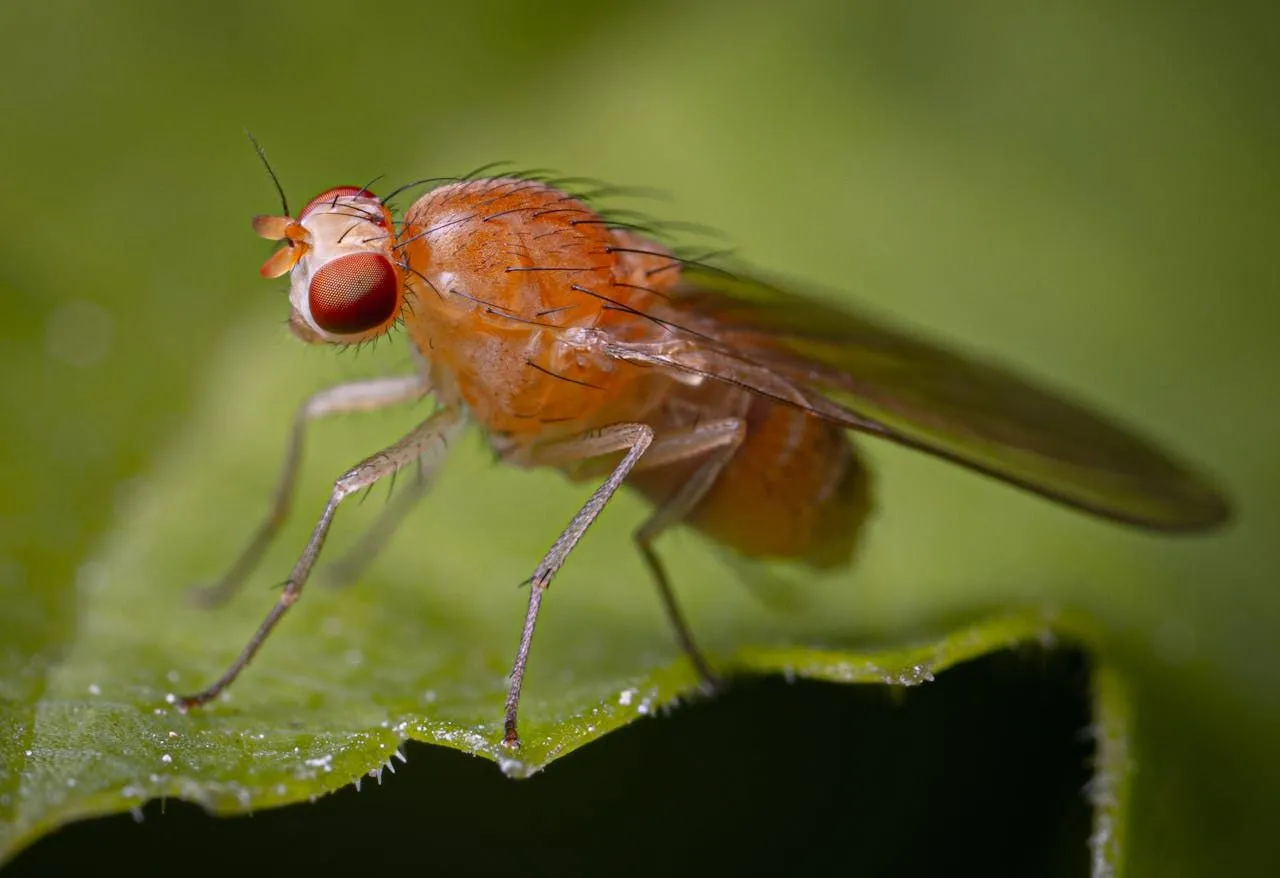
The golden or yellowish hairs on the thorax are the most reliable field identifier. The overlapping, clustered resting behavior — flies literally stacking on each other on window glass — is itself diagnostic. House flies do not aggregate this way.
Cluster fly larvae are external parasites of earthworms (Allolobophora spp.), completing development in soil before pupating and emerging as adults in late summer. There is no indoor larval breeding site to find or eliminate.
How Cluster Flies Enter Attics
Cluster flies begin seeking overwintering sites in late summer and early fall — typically August through October — well before temperatures drop severely. They exploit any gap that leads to a warm, sheltered void:
- Soffit and eave vents: The most common residential entry points, particularly on older homes with wooden soffits
- Gaps around fascia boards and trim: Especially where trim has shrunk, warped, or pulled away from the building
- Utility penetrations: Where electrical conduit, plumbing, or cable lines enter through the exterior wall
- Poorly fitted attic hatches: An attic hatch that doesn't seal tightly allows flies to move between the attic and living spaces
- Ridge vents: Improperly screened ridge vents provide access to large numbers of flies simultaneously
- Behind loose siding: Vinyl siding, wood clapboard, and shingle siding develop small voids over time that cluster flies readily colonize
A single attic can harbor thousands of flies if entry points are numerous and unaddressed over multiple seasons. These flies produce an aggregation pheromone — a chemical signal that draws them back to the same successful overwintering site year after year — meaning a colonized attic can see growing populations each fall unless exclusion work is completed.
Removing Cluster Flies from the Attic
Vacuum Removal
A wet/dry shop vacuum fitted with an extension tube is the most practical removal method for existing populations. Cluster flies are sluggish and cluster predictably on sun-warmed windows and walls, making them easy to collect in quantity without chemical exposure. Work on warm winter days when the flies are most active and visible. Seal the collected debris in a plastic bag before disposal.
Repeat vacuuming whenever activity is visible — particularly after warm spells in winter that temporarily activate the overwintering cluster.
Insecticide Treatment in the Attic
When populations are large enough that vacuuming alone is impractical, residual insecticide application in the attic space can significantly reduce numbers. Products containing deltamethrin, bifenthrin, or lambda-cyhalothrin applied as a crack-and-crevice or general surface treatment are effective against flies that contact treated surfaces. Follow all label directions carefully and ventilate the attic before accessing it again.
Aerosol pyrethrin sprays provide fast knockdown of active flies on warm days but offer no residual activity. They work best as a supplement to residual treatments during periods of high fly activity, not as a standalone approach.
Professional Treatment
For large infestations or attics that are difficult to access safely, a professional fly control service can conduct a proper structural inspection and apply appropriate treatments with the equipment suited to attic spaces. Pest management professionals can also identify all significant entry points during the inspection — something that is easy to miss on a DIY walkthrough.
Exclusion: The Only Permanent Solution
Killing existing cluster flies without sealing entry points guarantees the problem returns the following fall, reinforced by the aggregation pheromone left behind by the previous year's population. Exclusion is the only lasting strategy.
Conduct your exterior inspection in late summer — ideally July through early August, before cluster flies begin seeking overwintering sites:
- Inspect and screen soffit vents with fine-mesh hardware cloth (minimum 16-mesh) or replace damaged vent covers entirely
- Seal gaps around fascia boards where trim has pulled away from siding, using paintable latex caulk
- Fit the attic hatch with weatherstripping to prevent fly movement between the attic and living spaces
- Inspect ridge vents for open sections or gaps and install pest-excluding ridge vent material where needed
- Seal all exterior utility penetrations with silicone caulk or expanding foam appropriate for the gap size
- Check behind loose siding sections on south-facing walls — afternoon sun warming these surfaces is exactly what cluster flies seek
Our fly screens and doors article covers additional exclusion principles applicable throughout the home.
Why Do Flies Appear Indoors in Winter?
Cluster flies in the attic occasionally navigate into living spaces, particularly through ceiling light fixtures, electrical outlets, or gaps where pipes and wires pass through the ceiling. On warm, sunny winter days, the heat activates the overwintering cluster, and some flies move downward toward interior light rather than toward attic windows.
Flies in winter appearing on south-facing windows in the afternoon — especially in a pattern that returns after each warm spell — are a classic cluster fly signature. They are not breeding indoors; they are simply disoriented, woken by warmth from overwintering torpor.
Flies in the house appearing in larger numbers each spring indicate the cluster is emerging as temperatures consistently rise. This spring emergence is unavoidable once a population has overwintered — the only way to prevent it is to seal entry points the previous fall before the flies enter.
In my 15 years of pest management in central Florida, cluster flies are less common than in northern states because our winters rarely get cold enough to trigger large-scale overwintering aggregation. But I've inspected historic wood-framed homes throughout the Southeast where decades of accumulated cluster fly entry left every soffit void packed with old fly casings. The smell of old aggregations is distinctive — sweetish and slightly fermented — and it's often the first thing I notice when opening a poorly fitted attic hatch. Once you identify it, you don't forget it.
Cluster flies are a nuisance problem, not a structural or sanitation problem. Seal the entry points, remove the existing population, and the issue is resolved permanently.
How to Identify
Confirming cluster flies in the attic requires both species identification and behavioral observation. Cluster flies are 8 to 10 millimeters, slightly larger than house flies, with dark gray-olive coloring and distinctly visible golden or yellowish hairs on the thorax. Their wings overlap flat across the body when resting rather than angling apart. The diagnostic behavioral feature is aggregation: cluster flies congregate in large numbers on sun-warmed south-facing or west-facing surfaces, particularly upper walls and attic windows, and move sluggishly compared to house flies. Handling or crushing them releases a faint, sweet odor sometimes compared to buckwheat honey. The most critical identification task in an attic context is distinguishing cluster flies from blow flies: metallic blue or green flies in the attic almost always indicate a dead animal somewhere in the structure, not overwintering behavior, and require a completely different response. Dull gray-olive sluggish flies clustering on sun-facing windows confirm cluster fly presence; active metallic flies hovering near a specific wall or ceiling area signal a carcass-driven problem requiring source investigation before any other control step.
Main Causes
Indoor flies activity is driven by accessible breeding material and warmth. House flies and blow flies breed in garbage, pet waste, compost, and dead animals; fruit flies breed in overripe produce, drain biofilm, fermenting liquids, and unrinsed recycling; drain flies breed in the gelatinous film inside infrequently used drains; phorid flies breed in broken sewer lines and decomposing material under slabs. Adults find their way inside through torn screens, gaps around doors, vents, and any opening to the outside. Warm weather accelerates the entire life cycle, and a sustained population always points to an unaddressed source either inside the structure or close enough that adults keep arriving in volume.
Risk and Severity
Flies are mechanical disease vectors, picking up pathogens from feces, decomposing material, and garbage on their bodies and depositing them on food and surfaces. House flies in particular regurgitate digestive fluids when feeding, contaminating any surface they land on. Documented transmissible pathogens include Salmonella, E. coli, Shigella, and Campylobacter. Blow flies in homes signal a dead animal in or near the structure — a secondary health concern from decomposition gases and additional pest activity around the carcass. Biting flies (horse flies, stable flies, black flies) deliver painful bites and can trigger allergic reactions; in some regions they transmit parasites or bacterial infections. Children, elderly, and immunocompromised individuals face elevated risk.
Solutions and Actions
Effective fly control requires locating and eliminating the breeding source — adult-only treatments produce only temporary relief. For house flies: remove and seal garbage, clean pet waste daily, manage compost properly, and check for dead animals in wall voids or attics if blow flies are present. For fruit flies: discard overripe produce, clean drains with enzymatic cleaner weekly, rinse recycling, and empty kitchen compost containers daily. For drain flies: brush drain walls thoroughly and treat with enzymatic drain cleaner weekly for at least three weeks. For phorid flies: investigate for broken sewer lines or moisture intrusion under slabs. Adult control through sticky cards, UV light traps, and targeted residual sprays supplements but never substitutes for source elimination.
Prevention
Prevention combines source elimination with exclusion. Keep all kitchen garbage in sealed bins and empty daily during warm months. Refrigerate ripening produce, rinse all recyclables before storing, and run garbage disposals briefly each day. Clean drains weekly with enzymatic drain cleaner during fly season, and brush drain walls with a flexible drain brush quarterly to remove biofilm. Remove pet waste from the yard daily. Manage compost with a proper carbon-to-nitrogen ratio and bury food scraps under brown material. Install and maintain tight-fitting window and door screens, repair tears promptly, and add door sweeps to exterior doors. Inspect the structure annually for dead-animal indicators (sudden blow fly activity) and resolve any wildlife exclusion issues that could lead to carcasses in wall voids.
Frequently Asked Questions
Do cluster flies damage the attic structure?
No. Cluster flies do not chew wood, nest in insulation, or damage structural materials. Their only impact is nuisance — large numbers of flies present in the space, their tendency to emerge into living quarters on warm days, and the sweetish odor produced by large aggregations. Structural damage does not occur.
Why do cluster flies return to the same attic every year?
Cluster flies leave an aggregation pheromone that marks successful overwintering sites. Flies that survive winter in a location emerge in spring, reproduce outdoors in earthworm-rich soil, and their offspring are chemically drawn back to the same site in fall. Even killing all current occupants does not prevent future use of the site if entry points remain open.
Are cluster flies dangerous to health?
Cluster flies pose no meaningful health risk to humans. They do not bite, do not breed indoors, and are not associated with food contamination the way house flies are. Their sole impact is the nuisance of large numbers appearing in living spaces and the odor of very large aggregations.
When is the best time to seal against cluster flies?
Early to mid-August is ideal in most of North America — after summer repair work is typically complete but before cluster flies begin seeking overwintering sites in late August and September. Sealing in spring after they have already entered helps somewhat but will not be fully effective until the following fall, when new entry is prevented.
Sources: Penn State Extension — Cluster Fly Management | NPMA — Fly Identification and Control
Continue reading:
The Complete Guide to Flies: Identification, Prevention & Elimination →Sources & Further Reading
- House Flies — Pest Notes — University of California Statewide IPM Program
- Fruit Flies in the Home — Penn State Extension
- Controlling Pests Safely — U.S. Environmental Protection Agency