Part of the The Complete Guide to Flies: Identification, Prevention & Elimination guide.
Any horse owner who has watched a horse stomp, swish, toss its head, and refuse to stand quietly during fly season knows exactly how much these insects affect equine behavior and welfare. Flies are not merely an annoyance for horses — they cause painful bites, spread disease, reduce weight gain, and in heavy infestations can drive animals to injure themselves trying to escape. Managing flies effectively is a core component of equine care, and it starts with knowing which species you are dealing with.
For a comprehensive overview, see our Complete Guide to Flies.
Key Fly Species Affecting Horses
Several distinct fly species attack horses, and each has different biology, feeding habits, and preferred control methods. Treating them as interchangeable wastes time and resources.
Stable Flies (Stomoxys calcitrans)
Stable flies are the most economically significant biting fly species for horses in North America. They closely resemble house flies in size (6–7 mm) and coloration but are immediately distinguished by their rigid, forward-projecting proboscis — the piercing mouthpart used to take blood meals. Both males and females bite, preferring the lower legs, belly, and flanks. Horses react to stable fly bites by stamping, bunching, and standing in water if available.
Stable flies breed in decaying organic matter — particularly wet hay, manure mixed with bedding, rotting vegetation, and grass clippings. A well-managed manure disposal program is the single most effective stable fly control measure.
Horse Flies (Tabanus spp.)
Horse flies are large, powerful biting flies with scissor-like mouthparts that slice skin to create a blood pool rather than piercing like stable flies. Females are the biters; males feed only on pollen and nectar. At 10 to 25 millimeters long, horse flies are among the largest flies a horse will encounter, and their bites are intensely painful. They are fast, persistent, and difficult to avoid in areas near standing water and woodland edges.
Horse flies breed in moist soil near pond margins, stream banks, and wetland edges, making them difficult to control at the source. Their larvae are aquatic or semi-aquatic predators.
Face Flies (Musca autumnalis)
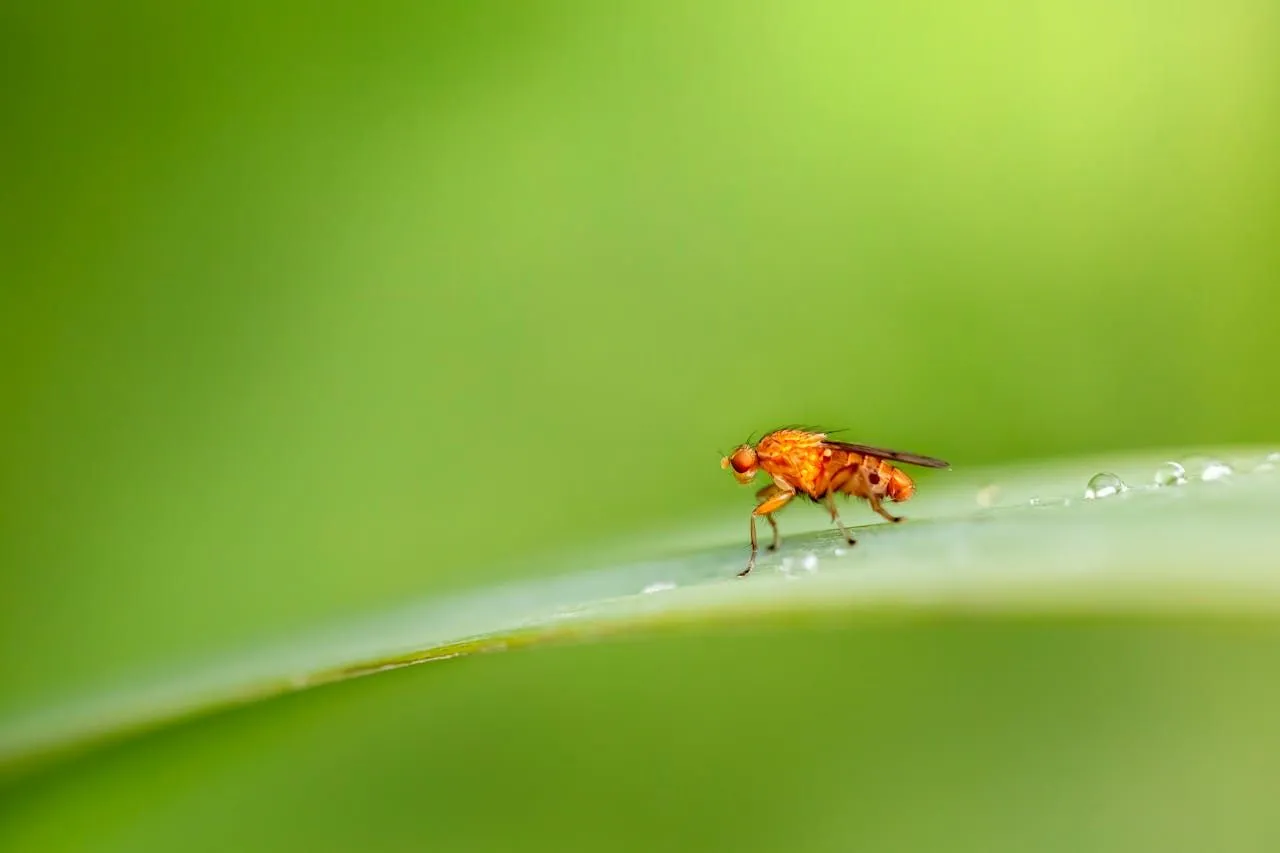
Face flies closely resemble house flies and are found throughout the northeastern and midwestern United States. They cluster around horses' faces, feeding on eye secretions, nasal mucus, and saliva — not blood. Their feeding behavior damages eye tissue over time and makes them efficient vectors of Moraxella equi, which causes infectious keratoconjunctivitis (pinkeye) in horses. A horse heavily infested with face flies will shake its head constantly and develop eye irritation or weeping.
Face flies breed in fresh horse manure on pasture — a crucial distinction from stable flies, which prefer mixed, fermenting material.
Horn Flies (Haematobia irritans)
More commonly a cattle pest, horn flies can affect horses pastured alongside cattle or in areas with heavy cattle use. They are small (3–4 mm), dark, and cluster in large numbers on the back, belly, and withers, where they remain nearly constantly except to breed. Females lay eggs only in fresh cattle manure — they do not breed in horse manure — so their presence on horses reflects nearby cattle operations.
| Species | Size | Bites? | Breeding Site | Preferred Feeding Location |
|---|---|---|---|---|
| Stable fly (Stomoxys calcitrans) | 6–7 mm | Yes (both sexes) | Wet manure/bedding, rotting vegetation | Lower legs, belly |
| Horse fly (Tabanus spp.) | 10–25 mm | Yes (females only) | Moist soil, pond margins | Back, neck, sides |
| Face fly (Musca autumnalis) | 6–7 mm | No (feeds on secretions) | Fresh horse manure on pasture | Face, eyes, nostrils |
| Horn fly (Haematobia irritans) | 3–4 mm | Yes (both sexes) | Fresh cattle manure | Back, withers, belly |
Health and Welfare Impacts
The American Veterinary Medical Association recognizes fly pressure as a significant animal welfare concern in equine management. The behavioral responses horses display to flies — constant movement, tail swishing, head shaking, leg stomping — represent genuine stress and expend energy that should go toward maintenance, growth, and performance.
Specific health impacts include:
- Weight loss and reduced condition: Horses that cannot rest because of flies expend calories on avoidance behavior and may reduce time spent grazing
- Eye disease: Face fly feeding directly damages corneal tissue and transmits Moraxella equi; horses in heavily infested pastures develop eye infections at higher rates
- Disease transmission: Do flies bite and transmit pathogens? Horse flies are mechanical vectors of equine infectious anemia (EIA), swamp fever, and anthrax — all serious conditions. They transfer infected blood directly on their mouthparts when feeding is interrupted by a swatting host and they move immediately to another animal
- Sweet itch exacerbation: Horses with insect hypersensitivity (sweet itch) react to Culicoides midges, but heavy stable fly pressure compounds overall skin irritation and stress
- Injuries from evasion: Horses fleeing flies can sustain injuries from fencing, other horses, or obstacles in the pasture
According to the USDA, stable flies alone cost the U.S. livestock industry hundreds of millions of dollars annually in production losses and control costs — a figure that includes equine operations.
Environmental Management: The Foundation of Control
No product applied to a horse addresses the source of the fly problem. Environmental management reduces breeding populations and is the most effective long-term strategy.
Manure management is paramount. Remove manure from stalls and paddocks at least twice weekly during fly season. Stable fly populations collapse when their breeding medium is consistently removed or properly composted. Manure composting — when done correctly with adequate turning to achieve internal temperatures above 140°F — destroys fly eggs and larvae. Spreading fresh manure thinly on fields for solar drying is a secondary option.
Eliminate wet organic matter. Wet hay under round bale feeders, decaying grass clippings piled near the barn, and wet bedding pushed outside stall doors are all ideal stable fly breeding sites. Remove or manage these accumulations weekly.
Improve drainage. Standing water and chronically wet areas in paddocks and near water troughs attract breeding flies and provide habitat for horse fly larvae in adjacent areas. Improving drainage around the barn reduces both species.
Pasture management. Mow tall grass around barn perimeters to reduce resting sites for adult flies and to reduce the moist soil conditions that favor horse fly larvae near pond and stream edges.
Topical Repellents and Insecticides
Topical fly control products for horses fall into several categories, each with specific appropriate uses:
Pyrethrins and synthetic pyrethroids (permethrin, cypermethrin): The most widely used equine fly repellents. Applied as sprays or wipe-ons directly to the horse's coat, they repel and kill flies on contact. Permethrin at appropriate concentrations is effective against stable flies, horn flies, and face flies for 1 to 4 days per application depending on weather and sweat. It should not be used near cats.
Organophosphate-based sprays: Coumaphos and related products provide somewhat longer residual than pyrethroids in some conditions but carry higher toxicity concerns and require careful label adherence.
Pour-on and spot-on formulations: Designed for application along the topline and legs, these provide 1 to 2 weeks of residual protection against stable flies and horn flies with less labor than daily spraying.
Botanical and natural repellents: Products based on citronella, eucalyptus, neem oil, or essential oil blends provide meaningful but shorter-duration repellency — typically a few hours. They are a reasonable choice for show situations or horses with skin sensitivities to synthetic products. See our broader guide on natural fly repellents for context on how these compare to synthetic options.
Our article on fly bite treatment covers first-aid steps when horses do sustain significant bites.
Physical Barriers
Physical barriers are among the most humane and effective fly control tools for horses:
- Fly masks: Fine-mesh masks covering the eyes, face, and sometimes ears dramatically reduce face fly feeding and eye irritation. Well-fitted masks do not impair vision and most horses tolerate them well. Check fit daily and remove for night turnout
- Fly sheets: Lightweight body sheets cover the trunk and flanks, protecting against stable flies on the belly and sides. Modern designs allow adequate airflow in warm weather
- Leg wraps: Stable fly feeding concentrates on the lower legs; Velcro-fitted leg wraps or leggings specifically designed to deter stable flies are available for horses that react strongly to lower-leg biting
- Fans in stalls: Stable flies are weak fliers. High-velocity fans positioned to create airflow across stall entrances and in occupied stalls significantly reduce fly landings during peak hours
Integrated Pest Management for Horses
In my 15 years working pest management in central Florida, equine facilities that struggle most with flies are almost always those relying on a single control method — usually a spray product — while neglecting source reduction. The most successful operations I've worked with combine weekly manure removal, strategic fan placement, fly predator releases (parasitic wasps that attack stable fly pupae in manure), and topical repellents only as a supplemental layer. When that combination is in place consistently, horse behavior during fly season changes noticeably — the stamping, bunching, and head tossing that signal high fly stress drop substantially.
Flies are a constant in equine management, but high fly pressure is not inevitable. A systematic, integrated approach makes a real difference in both animal welfare and daily management burden.
How to Identify
Four species account for most fly pressure on horses. Stable flies (Stomoxys calcitrans) are 6--8 mm, gray with a checkerboard abdomen pattern, and bite the lower legs during daylight hours, causing horses to stamp and kick. Horse flies (Tabanidae) are large at 10--25 mm, with patterned eyes and a painful slashing bite; they target the neck, withers, belly, and face, and are most active near water on warm sunny days.
Face flies (Musca autumnalis) resemble house flies but cluster around the eyes, nostrils, and mouth of horses in pasture. They do not bite, but mechanical irritation spreads pinkeye and other pathogens. Horn flies (Haematobia irritans) are small at 3--5 mm and cluster in tight masses on the back and withers, taking multiple blood meals daily.
Prevention
Manure management is the foundation of fly control on horse properties. Remove it from stalls and paddocks daily, and compost at a site at least 50 meters from housing. Turn compost regularly to maintain temperatures that kill larvae.
Biological control through fly predator wasps (Spalangia and Muscidifurax species) released fortnightly from May to September significantly reduces stable fly and house fly populations without chemicals. Physical barriers including fly sheets, fly masks, and leg wraps protect horses during peak fly hours.
Permethrin-based residual sprays applied to stall walls, feed room surfaces, and fence lines reduce fly resting populations. Rotate active ingredients to prevent resistance. Automatic spray systems in stalls provide consistent coverage during the highest-pressure months.
Main Causes
Indoor flies activity is driven by accessible breeding material and warmth. House flies and blow flies breed in garbage, pet waste, compost, and dead animals; fruit flies breed in overripe produce, drain biofilm, fermenting liquids, and unrinsed recycling; drain flies breed in the gelatinous film inside infrequently used drains; phorid flies breed in broken sewer lines and decomposing material under slabs. Adults find their way inside through torn screens, gaps around doors, vents, and any opening to the outside. Warm weather accelerates the entire life cycle, and a sustained population always points to an unaddressed source either inside the structure or close enough that adults keep arriving in volume.
Risk and Severity
Flies are mechanical disease vectors, picking up pathogens from feces, decomposing material, and garbage on their bodies and depositing them on food and surfaces. House flies in particular regurgitate digestive fluids when feeding, contaminating any surface they land on. Documented transmissible pathogens include Salmonella, E. coli, Shigella, and Campylobacter. Blow flies in homes signal a dead animal in or near the structure — a secondary health concern from decomposition gases and additional pest activity around the carcass. Biting flies (horse flies, stable flies, black flies) deliver painful bites and can trigger allergic reactions; in some regions they transmit parasites or bacterial infections. Children, elderly, and immunocompromised individuals face elevated risk.
Solutions and Actions
Effective fly control requires locating and eliminating the breeding source — adult-only treatments produce only temporary relief. For house flies: remove and seal garbage, clean pet waste daily, manage compost properly, and check for dead animals in wall voids or attics if blow flies are present. For fruit flies: discard overripe produce, clean drains with enzymatic cleaner weekly, rinse recycling, and empty kitchen compost containers daily. For drain flies: brush drain walls thoroughly and treat with enzymatic drain cleaner weekly for at least three weeks. For phorid flies: investigate for broken sewer lines or moisture intrusion under slabs. Adult control through sticky cards, UV light traps, and targeted residual sprays supplements but never substitutes for source elimination.
Frequently Asked Questions
What is the most effective fly spray for horses?
Permethrin-based sprays at 0.5% or higher concentration consistently outperform botanical alternatives in controlled studies for repellency duration and effectiveness against stable flies, horn flies, and face flies. For horses that cannot tolerate permethrin or in situations requiring shorter-interval applications, oil of citronella or neem-based products provide meaningful but shorter-duration protection.
Do fly traps help around horse facilities?
Bag-type baited fly traps and sticky tape traps can reduce adult stable fly and house fly populations meaningfully when placed in strategic locations — near manure storage areas, at barn entrances, and along fence lines. They work best as a supplemental measure alongside environmental management, not as a primary control. Place them away from the horses themselves to avoid drawing more flies into the immediate area.
Are horse flies dangerous to humans?
Yes. Horse flies deliver painful bites and the wounds can swell significantly. They are also mechanical vectors of several pathogens in some regions. In areas where tularemia is present, horse flies have been implicated in transmission. Anyone bitten should clean the wound thoroughly and monitor for signs of infection.
How do fly predators work for equine facilities?
Fly predators are commercially available parasitic wasps (Spalangia and Muscidifurax species) that deposit their eggs inside stable fly and house fly pupae, killing the developing fly. They are released directly into manure and wet bedding areas and require regular monthly releases throughout fly season. They are harmless to horses, humans, birds, and other animals and integrate well with a comprehensive manure management program.
Sources: AVMA — Fly Control in Horses | USDA — Livestock Pest Management
Continue reading:
The Complete Guide to Flies: Identification, Prevention & Elimination →Sources & Further Reading
- House Flies — Pest Notes — University of California Statewide IPM Program
- Fruit Flies in the Home — Penn State Extension
- Controlling Pests Safely — U.S. Environmental Protection Agency