Part of the The Complete Guide to Flies: Identification, Prevention & Elimination guide.
A house fly lands on your sandwich for two seconds and flies away. Most people brush it off as an annoyance. What actually happened in those two seconds is more significant: the fly potentially transferred bacteria from whatever it was feeding on moments before — garbage, animal waste, or a decomposing food source — directly onto the surface of your food. Understanding how flies spread foodborne illness changes how seriously you treat even a brief contact event.
For a comprehensive overview, see our Complete Guide to Flies.
How Flies Transfer Pathogens: The Mechanics
Flies are mechanical vectors of disease — they do not harbor pathogens internally the way mosquitoes carry malaria parasites. Instead, they transfer microorganisms physically, on external body surfaces and through their digestive process. Several mechanisms are involved:
Tarsal contamination: A fly's feet and leg segments are covered with chemosensory hairs and sticky pads used for tasting and gripping surfaces. These structures pick up microorganisms from every surface the fly contacts. A house fly (Musca domestica) that has walked across fresh animal feces carries a significant microbial load on its tarsi, which it deposits on the next surface it lands on.
Mouthpart transfer: Flies have sponging mouthparts (a proboscis) that they use to liquefy and ingest food. On solid food, they first regurgitate digestive fluid to begin external digestion, then sponge up the resulting liquid. This regurgitation deposits gut contents — including any pathogens present — directly onto food surfaces.
Body surface contamination: The fly's body hairs, compound eye surfaces, and thorax bristles all trap microorganisms from the fly's environment. Research published through NIH has demonstrated that individual fly legs can carry hundreds of thousands of bacteria, and that body surfaces harbor distinct microbial communities reflecting the fly's recent foraging history.
Fecal spotting: Flies defecate frequently — every few minutes when active and feeding. The dark specks visible on surfaces in fly-infested areas are fecal deposits and regurgitation spots, both of which contain concentrated microbial material.
Pathogens Flies Are Known to Carry
The house fly has been documented carrying over 100 different pathogens according to the CDC, and the World Health Organization (WHO) identifies flies as significant contributors to the burden of diarrheal disease globally. The most important pathogens in a food safety context include:
| Pathogen | Disease Caused | Primary Source on Fly |
|---|---|---|
| Salmonella spp. | Salmonellosis (gastroenteritis) | Feces, garbage, raw meat |
| Escherichia coli (including O157:H7) | Severe gastroenteritis, HUS | Animal feces, sewage |
| Campylobacter jejuni | Campylobacteriosis | Poultry feces, animal waste |
| Shigella spp. | Shigellosis (dysentery) | Human feces, sewage |
| Vibrio cholerae | Cholera | Contaminated water, feces |
| Staphylococcus aureus | Staph food poisoning | Skin, wound secretions, garbage |
| Listeria monocytogenes | Listeriosis | Soil, animal feces, decaying vegetation |
| Hepatitis A virus | Hepatitis A | Human feces, contaminated water |
It is worth noting that Salmonella and Campylobacter are the two most common causes of bacterial food poisoning in the United States. Both are found at high prevalence in house fly populations in studies conducted near poultry operations, cattle farms, and food processing facilities.
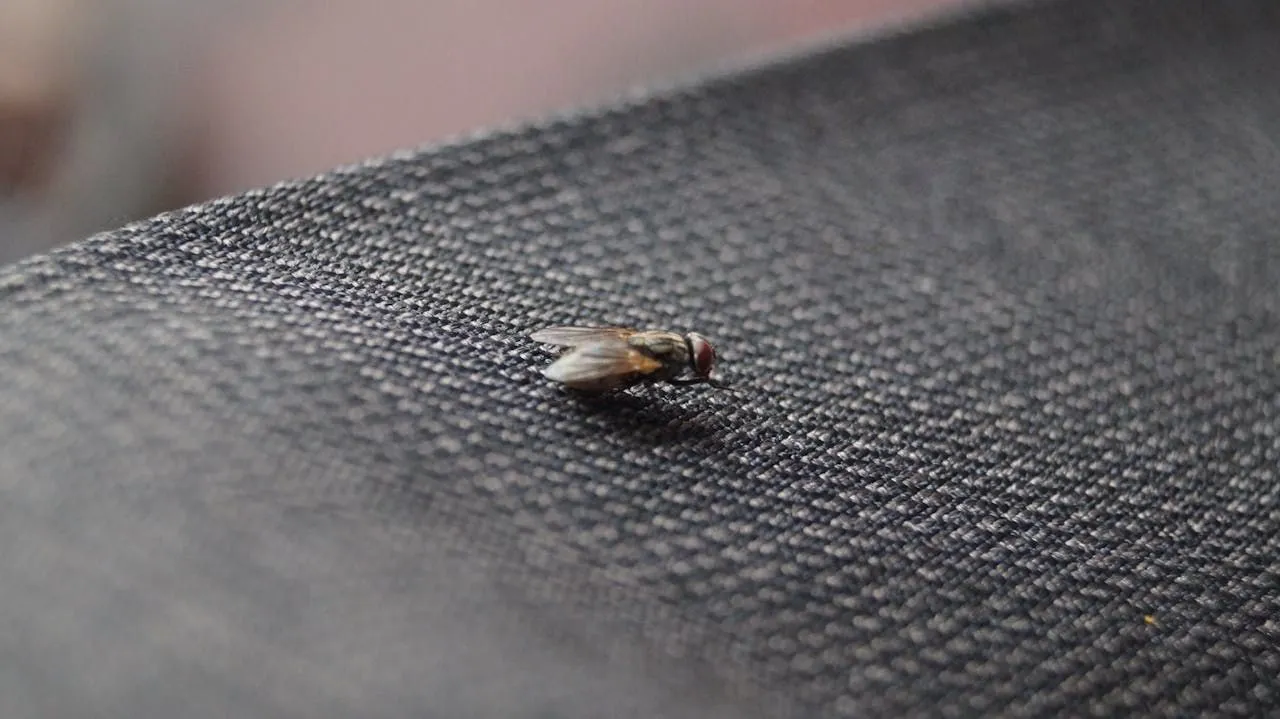
How Quickly Can a Fly Contaminate Food?
The transfer of pathogens from a fly to a food surface can occur in less than one second of contact — the time it takes for the fly's tarsi to make contact with the food surface and lift off. Regurgitation, which deposits gut contents more directly, occurs within 2 to 5 seconds of landing when the fly detects a suitable food source.
A 2019 study examining fly microbiome transfer found that flies visiting a single contaminated source could spread detectable quantities of pathogens to multiple subsequent surfaces during a single foraging episode. The implication for food safety is direct: there is no "safe" duration of fly contact with food. Even the briefest landing event should be treated as a contamination incident in high-stakes settings.
Which Fly Species Are the Greatest Food Safety Risk?
Not all fly species pose equal food safety risk. The threat level depends on where the fly breeds and what it feeds on as an adult.
House flies present the highest food safety risk of common indoor species. They breed in manure, garbage, and decaying organic matter, then move freely between these contaminated sources and food preparation areas. Their willingness to feed on virtually any organic material means their pathogen loads reflect the worst of what is nearby.
Blow flies — green bottle flies and related species — breed in carrion and are efficient carriers of bacteria from decomposing tissue. They are a significant concern in meat processing and commercial kitchen settings.
Fruit flies (Drosophila melanogaster) pose a lower but nonzero risk. They breed in fermenting fruit and sugary substrates and can carry yeasts and bacteria associated with fermentation. Their primary food safety concern in commercial settings is contamination of beverages and fermented food products.
Drain flies and fungus gnats are generally considered lower-risk species for direct food contamination but may indicate sanitation issues that invite higher-risk species.
High-Risk Settings and Populations
The FDA identifies fly control as a critical component of food facility sanitation requirements under the Food Safety Modernization Act (FSMA). Commercial kitchens, food processing plants, outdoor food service operations, and cafeterias all face regulatory requirements to maintain adequate fly control.
The risk is not evenly distributed across the population. Infants, elderly individuals, pregnant women, and immunocompromised people face significantly higher risk of serious outcomes from fly-vectored pathogens. A Salmonella infection that causes two days of discomfort in a healthy adult can be life-threatening in a vulnerable individual.
Our article on flies and disease covers the broader health implications of fly-borne pathogen transmission, and flies and food safety addresses the specific regulatory framework for commercial food operations.
Protecting Your Kitchen from Fly Contamination
Eliminate Fly Attractants
Flies enter kitchens because of what attracts flies: food sources, fermenting organic matter, and warmth. Removing attractants reduces the fly pressure you have to manage with other means:
- Store all food in sealed containers or the refrigerator
- Empty kitchen garbage cans daily and use bins with tight-fitting lids
- Clean under and around appliances regularly — food debris accumulates in these areas and becomes a fly attractant and breeding site
- Address flies in the kitchen proactively; a small fruit fly problem in the kitchen signals an organic matter source that will sustain and grow the population
- Clean garbage disposals weekly using ice and a cleaning tablet, then flush with hot water — the biofilm in disposals supports drain fly breeding and provides food for house flies
Physical Barriers
Install and maintain well-fitting window screens and ensure door seals are intact. Gaps around screen frames, torn mesh, and ill-fitting door sweeps are the primary entry routes for house flies and blow flies seeking kitchen food sources. Air curtains — high-velocity fans positioned over commercial kitchen doorways — create an effective invisible barrier for food service operations where doors must remain open.
Responding to Fly Contact with Food
When a fly makes contact with prepared food:
- Discard the food when practical, particularly in high-risk situations (serving to elderly, immunocompromised, or very young individuals)
- In lower-risk situations, understand that the actual pathogen transfer dose may be below the infectious threshold for healthy adults — but this is not a guarantee
- Clean and sanitize surfaces that flies have contacted, particularly food-contact surfaces
In my 15 years of pest management in central Florida, the most common food safety failure mode I see in residential kitchens is the uncovered fruit bowl. Ripening bananas, peaches, and tomatoes left on the counter attract both fruit flies (which breed in them) and house flies (which feed and defecate on them). The fruit bowl is also often adjacent to the cutting board used for food preparation, creating a direct contamination pathway. Covering or refrigerating fruit eliminates this route entirely.
Fly contact with food is not a minor inconvenience to brush off — it is a genuine contamination event that warrants a proportional response, particularly when serving vulnerable household members. Getting rid of flies in and around food preparation areas is a concrete health protection measure, not just a comfort issue.
Main Causes
Fly-borne food poisoning occurs when flies transfer pathogens from contaminated sources to food or food-contact surfaces through a chain with several contributing factors. The starting point is always a contaminated source: animal feces, decaying organic matter, garbage, sewage, or any material harboring bacterial pathogens. Flies feeding on these sources accumulate bacteria on their tarsi, mouthparts, and body hairs. The contamination event occurs when those same flies access uncovered food or preparation surfaces. Several conditions increase risk: warm weather that accelerates bacterial growth after transfer, food remaining at room temperature that allows transferred pathogens to multiply to infectious doses, and inadequate sanitation that sustains both fly breeding and pathogen accumulation nearby. High fly population density compounds risk because more flies mean more frequent contamination events per hour. Food service settings with multiple exposed surfaces, active food preparation, and high foot traffic create the highest-stakes environment for fly-borne foodborne illness events.
How to Identify
Identifying fly-related food contamination risk requires monitoring specific signs rather than waiting for illness to occur. Fly specks (small dark spots of fecal material and regurgitate) on walls, surfaces, and food packaging indicate sustained fly activity and regular surface contact. Observing flies alternating between a contaminated source and a food surface within minutes represents a confirmed contamination pathway. House flies (dull gray, 6 to 7 mm, landing on food and garbage alternately) and blow flies (metallic, 8 to 14 mm, especially around raw meat and seafood) are the highest-risk species. Fruit flies on fermented beverages and uncooked foods carry bacteria at generally lower risk levels. The presence of visible maggots in any food product confirms both active breeding and repeated adult fly access; discard the affected food immediately and conduct a full source investigation. Any food that receives prolonged fly contact, especially during warm conditions, should be discarded rather than consumed regardless of how briefly the contact occurred.
Prevention
Preventing fly-borne food poisoning requires consistent attention to fly access at every point where food is prepared, stored, or served. Store all food in sealed containers or covered dishes, particularly at room temperature. Cover food actively whenever flies are present indoors. Empty kitchen garbage bins daily using bins with tight-fitting lids, and rinse bins weekly to remove residual odor. Keep food preparation surfaces and cutting boards clean after every use. Install and maintain window screens and door sweeps to prevent fly entry. In commercial settings, the FDA Food Safety Modernization Act requires documented fly control programs including physical barriers at entry points such as air curtains and tight-fitting screen doors. Clean drain areas monthly with enzymatic cleaners to eliminate the biofilm that sustains the fly populations moving between drains and food surfaces. Wash produce under running water before preparing or serving it. The combination of fly exclusion and consistent sanitation provides the most reliable protection against fly-mediated foodborne illness in both residential and commercial settings.
Risk and Severity
Flies are mechanical disease vectors, picking up pathogens from feces, decomposing material, and garbage on their bodies and depositing them on food and surfaces. House flies in particular regurgitate digestive fluids when feeding, contaminating any surface they land on. Documented transmissible pathogens include Salmonella, E. coli, Shigella, and Campylobacter. Blow flies in homes signal a dead animal in or near the structure — a secondary health concern from decomposition gases and additional pest activity around the carcass. Biting flies (horse flies, stable flies, black flies) deliver painful bites and can trigger allergic reactions; in some regions they transmit parasites or bacterial infections. Children, elderly, and immunocompromised individuals face elevated risk.
Solutions and Actions
Effective fly control requires locating and eliminating the breeding source — adult-only treatments produce only temporary relief. For house flies: remove and seal garbage, clean pet waste daily, manage compost properly, and check for dead animals in wall voids or attics if blow flies are present. For fruit flies: discard overripe produce, clean drains with enzymatic cleaner weekly, rinse recycling, and empty kitchen compost containers daily. For drain flies: brush drain walls thoroughly and treat with enzymatic drain cleaner weekly for at least three weeks. For phorid flies: investigate for broken sewer lines or moisture intrusion under slabs. Adult control through sticky cards, UV light traps, and targeted residual sprays supplements but never substitutes for source elimination.
Frequently Asked Questions
Is it safe to eat food a fly landed on?
It depends on the duration of contact, the fly species, what the fly was previously feeding on, and the health status of the person eating. For healthy adults, brief contact with a single fly presents low but nonzero risk. For vulnerable individuals — the elderly, infants, pregnant women, or immunocompromised people — the safer response is to discard food that has had fly contact, particularly if the contact was prolonged or involved regurgitation.
How do flies spread disease without biting?
Flies transfer pathogens mechanically — on their feet, body surfaces, and through regurgitation onto food. They act as moving contamination vehicles that pick up microorganisms from one source and deposit them on another. Biting is not required for pathogen transfer; physical contact with food or food-contact surfaces is sufficient.
Which is more dangerous: a fly on cooked food or raw food?
A fly on cooked food is potentially more dangerous in practice, because cooked food has had its microbial load reduced by heat — any pathogens present after cooking were introduced after cooking, often by the fly itself. On raw food, fly-introduced pathogens compete with the existing microbial community and may be partially controlled by cooking. This is why covering cooked food and keeping it away from fly contact is particularly important.
Does freezing food kill fly-deposited bacteria?
No. Freezing halts bacterial growth and activity but does not reliably kill bacteria. Pathogens including Salmonella, Listeria, and E. coli survive freezing and resume activity when the food thaws. Fly-contaminated food that is subsequently frozen and thawed remains a risk.
Sources: CDC — Flies and Disease | WHO — Foodborne Disease | FDA — Food Safety Modernization Act | NIH — Fly Microbiome Research
Continue reading:
The Complete Guide to Flies: Identification, Prevention & Elimination →Sources & Further Reading
- House Flies — Pest Notes — University of California Statewide IPM Program
- Fruit Flies in the Home — Penn State Extension
- Controlling Pests Safely — U.S. Environmental Protection Agency