Part of the The Complete Guide to Flies: Identification, Prevention & Elimination guide.
Walk into any hardware store during summer and you will find electric fly zappers hanging next to bags of baited fly traps, both promising to solve your fly problem. They are not interchangeable. Each device targets flies through a fundamentally different mechanism, attracts different species, works best in different settings, and has different collateral effects on beneficial insects. Choosing the right tool depends on knowing how each one actually works.
For a comprehensive overview, see our Complete Guide to Flies.
How Electric Fly Zappers Work
Bug zappers for flies use ultraviolet (UV) light to attract flying insects toward an electrified grid. When an insect contacts the grid, it completes an electrical circuit and is killed instantly by the current. The characteristic "zap" sound is the electrical discharge.
The attractant mechanism relies on the phototactic behavior of flying insects — their tendency to navigate toward light sources. UV light in the 300 to 400 nanometer range is particularly attractive to many flying insects, which is why zappers use UV-emitting bulbs rather than standard incandescent or LED sources.
The critical limitation of zappers becomes apparent when you look at what they actually catch. Multiple independent studies have found that house flies, stable flies, and fruit flies — the target pest species in most residential and commercial situations — represent less than 1 percent of the insects killed by outdoor electric zappers. The overwhelming majority of kills are moths, beetles, midges, and other non-pest species, including significant numbers of beneficial insects like parasitic wasps and midges that are natural enemies of pest species.
This matters because house flies, fruit flies, and blow flies are not strongly phototactic compared to moths and other night-flying insects. They navigate primarily by odor cues — they find food, breeding sites, and mates through their highly developed olfactory system, not by flying toward light. UV light is simply not an efficient attractant for the fly species most likely to be causing problems in your kitchen or around your garbage.
Electric fly swatters use the same electrified grid principle in a handheld format. Unlike stationary zappers, they are highly effective for targeting individual flies directly and have essentially zero non-target insect impact.
How Fly Traps Work
Fly traps use chemical attractants — food lures, pheromones, or both — to draw flies into an enclosure they cannot escape. The attractants mimic the odor cues flies actually use to locate food and breeding sites, making them far more effective at targeting specific pest species than UV light.
Baited Bag Traps
The most common outdoor fly trap design uses a water-soluble attractant dissolved in a sealed bag or container. The odor plume from the dissolved bait draws house flies and blow flies into the bag through a one-way entrance. Flies that enter cannot navigate out and eventually drown or die from dehydration. These traps can catch thousands of flies per bag when positioned correctly.
The attractant chemistry typically mimics decomposing protein — exactly what house flies are searching for when they are foraging. This specificity is what makes baited traps so much more effective against target pest species than UV zappers.
Sticky Traps and Fly Paper
Fly paper and hanging sticky traps use a combination of attractant (often food-based) and a non-drying adhesive to capture flies that land on the surface. They are inexpensive, require no power, and work continuously. The trade-off is visual — an active fly paper strip loaded with flies is conspicuous and not appropriate for customer-facing areas.
Sticky yellow boards are particularly effective for fungus gnats, fruit flies, and other small flying species that move close to surfaces rather than flying high.
Apple Cider Vinegar and Bait Traps
The classic apple cider vinegar fly trap is a simple and genuinely effective tool for fruit fly populations. The fermentation odor mimics overripe fruit — the primary food source and breeding substrate fruit flies seek. A few drops of dish soap break the surface tension of the liquid, preventing fruit flies from escaping once they land on the surface.
Pheromone Traps
Pheromone-based traps use synthetic versions of the sex pheromones emitted by female flies to attract and trap males. They are species-specific and highly efficient for monitoring population levels, but are primarily used in agricultural and commercial settings rather than residential ones.
Direct Comparison
| Factor | Electric Zapper | Baited Fly Trap |
|---|---|---|
| Primary attractant | UV light | Chemical lure (food/pheromone) |
| Effective against house flies | Low | High |
| Effective against fruit flies | Very low | High (vinegar traps) |
| Effective against blow flies | Low | High |
| Effective against moths | High | Low |
| Non-target insect impact | High — kills beneficial insects | Low — species-selective |
| Noise | Yes — audible zapping | None |
| Power requirement | Yes | No (most designs) |
| Maintenance | Clean grid regularly | Replace bait or dispose of full bag |
| Indoor/outdoor | Both | Both (some odorous bags outdoor only) |
| Cost per unit | $20–$80 | $5–$15 |
| Best for | Enclosed outdoor dining, patios, some commercial kitchens | Outdoor fly pressure reduction, manure management areas, around garbage storage |
Which to Use When
Use a zapper in enclosed outdoor areas — covered patios, gazebos, screen rooms — where light attraction is effective because the space limits fly movement and UV light becomes a relatively more competitive attractant than it would be in open settings. Commercial kitchens that meet health code requirements use specific indoor insect light traps (ILTs) designed to capture rather than zap flies, reducing contamination from fly debris falling into food preparation areas.
Use baited traps when you need to actually reduce fly populations around garbage storage areas, near manure, around outdoor dining areas, or anywhere house flies and blow flies are the primary concern. Position them 20 to 30 feet away from the area you are trying to protect, not directly at the seating or food preparation area — you want to draw flies toward the trap, not concentrate them near people.
Use fly paper or sticky traps indoors in areas where aesthetics are not a priority — utility rooms, basements, barns, garages — and for fungus gnat and fruit fly problems where small flying insects are the target.
Use an apple cider vinegar trap specifically for indoor fruit fly infestations, placing traps near the source — overripe fruit, a fermenting drain, a compost bin — for fastest results.
Use DIY fly traps when you want to address specific attractant-based problems with materials on hand and the flexibility to adjust bait to the target species.
Placement Is Half the Battle
For baited traps, placement determines effectiveness more than brand or price. Position bags upwind from the area you want to protect, at a height of 3 to 5 feet (where flies naturally forage), and in direct sunlight — heat activates the lure chemistry and increases the effective odor plume. Replace bait when it loses odor, typically every 2 to 4 weeks.
For zappers, position them at least 10 to 15 feet away from where people will be eating or sitting. Zappers positioned directly over food preparation areas are a contamination hazard — fly particles disperse when the insect is electrocuted and can fall into food.
In my 15 years of pest management work in central Florida, the most consistent mistake I see homeowners make with zappers is placing them directly on the patio table or near the grill and expecting them to keep flies away from food. Zappers don't repel flies from food — they attract and kill insects that happen to fly toward the light, which is not the behavioral driver for most pest fly species. Baited traps placed 20 to 30 feet upwind from the cooking area and set out the evening before a cookout consistently outperform any zapper in reducing fly counts during an outdoor meal.
How to Identify
Before choosing between a zapper and a trap, identify the fly species causing the problem. House flies (6--8 mm, gray, four dark thoracic stripes) and blow flies (8--12 mm, metallic blue or green) navigate primarily by odor cues. Baited traps are the correct tool for both. Electric zappers capture these species at rates well below 1 percent of total kills.
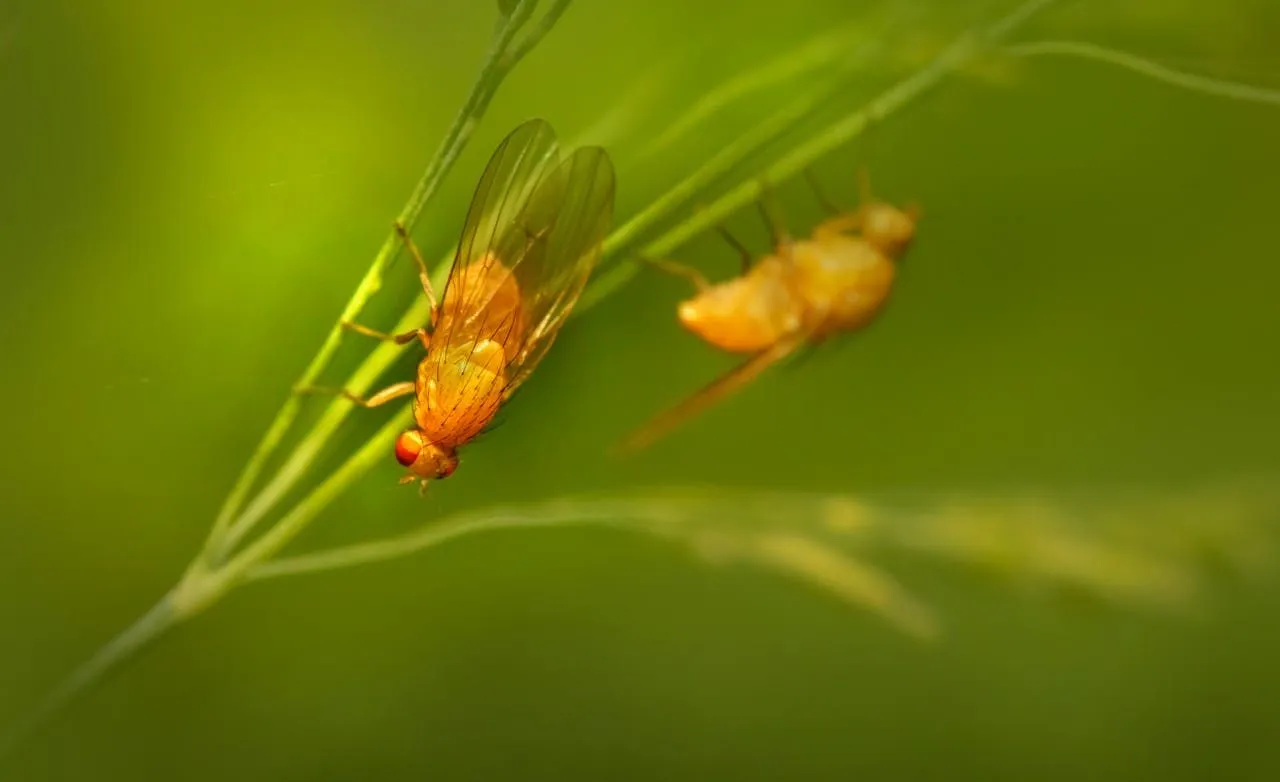
Fruit flies (3--4 mm, tan body, red eyes) respond strongly to fermentation odors and are captured reliably by vinegar-based and food-lure traps. Drain flies (2--5 mm, moth-like wings) rest near drains and are controlled by treating the breeding site, not by any capture device. Cluster flies (8--10 mm, sluggish, golden thoracic hairs) collect at windows and respond well to sticky window traps.
If you cannot identify the species by appearance, place sticky monitoring traps at suspected entry points to confirm what is present before investing in a control device.
Risk and Severity
Choosing the wrong device compounds a fly problem. Electric zappers positioned near food create a contamination hazard: when insects contact the electric grid, fragments disperse into the air around the unit. Health codes in most jurisdictions prohibit open-grid zappers in commercial food service areas for this reason.
Using a zapper as the sole control for house fly or fruit fly infestations wastes time while the breeding population grows. Zappers selectively kill moths and beneficial insects such as parasitic wasps while the target pest species, which are not strongly phototactic, continue developing.
Misplaced baited traps draw flies toward people rather than away from them. Bag traps positioned at the table or grill concentrate flies directly in the zone you are trying to protect.
Solutions and Actions
Match device to species and setting. For outdoor house fly and blow fly control, deploy baited bag traps 20--30 feet upwind from the protected area at a height of 3--5 feet in direct sunlight to activate lure chemistry. Replace bait when odor fades, typically every 2--4 weeks.
For indoor use in kitchens or food service areas, use UV glue board traps with a capture board rather than an electrified grid. Position at fly height (4--6 feet) away from competing light sources and replace glue boards before they reach capacity.
For targeted individual fly control with zero non-target insect impact, a handheld electric swatter is the most precise option.
Prevention
Neither zappers nor traps address breeding sources, so neither prevents infestations. Sustainable fly prevention requires eliminating what flies need to establish: organic material for egg-laying and moisture for larval development. Remove garbage daily, collect animal waste, clean slow drains weekly with enzymatic cleaner, and store food in sealed containers.
Physical exclusion through intact window screens, fitted door sweeps, and sealed structural gaps stops flies at the entry point before any capture device becomes necessary. Use traps as a monitoring tool to detect pressure changes and as supplemental adult reduction, not as the primary management strategy.
Main Causes
Indoor flies activity is driven by accessible breeding material and warmth. House flies and blow flies breed in garbage, pet waste, compost, and dead animals; fruit flies breed in overripe produce, drain biofilm, fermenting liquids, and unrinsed recycling; drain flies breed in the gelatinous film inside infrequently used drains; phorid flies breed in broken sewer lines and decomposing material under slabs. Adults find their way inside through torn screens, gaps around doors, vents, and any opening to the outside. Warm weather accelerates the entire life cycle, and a sustained population always points to an unaddressed source either inside the structure or close enough that adults keep arriving in volume.
Frequently Asked Questions
Do bug zappers actually reduce fly populations?
For house flies, stable flies, fruit flies, and blow flies — the pest species most likely causing problems — electric zappers are largely ineffective as population control tools. Studies consistently show these species make up less than 1 percent of zapper catches. Zappers are most effective against phototactic species like moths and some mosquito relatives.
Are baited fly traps safe to use around children and pets?
Most commercial baited fly traps use food-based attractants with low toxicity. The liquid inside bag traps is generally not acutely toxic but is foul-smelling and not intended for ingestion. Keep traps away from areas where young children or pets might contact them directly. Read and follow all label directions for the specific product.
Can I use both a zapper and a trap together?
Yes, and in high-pressure fly situations this can be a sensible approach. Use baited traps to target house flies and blow flies specifically, and a zapper to reduce the overall flying insect presence in an enclosed outdoor area. Just ensure the zapper is positioned away from food surfaces and that both devices are placed strategically for maximum effectiveness.
Why do some indoor insect light traps use glue boards instead of an electric grid?
Health code regulations in most jurisdictions require that insect light traps (ILTs) used in commercial food service kitchens use glue boards rather than electrocution grids. The reason is food safety: an electric grid causes insects to fragment upon contact, dispersing fly particles — potentially including pathogens — into the surrounding air. A glue board captures flies intact, containing the contamination. Our article on fly traps covers the full range of commercial ILT designs.
Sources: EPA — Pest Control Methods | NPMA — Integrated Fly Management
Continue reading:
The Complete Guide to Flies: Identification, Prevention & Elimination →Sources & Further Reading
- House Flies — Pest Notes — University of California Statewide IPM Program
- Fruit Flies in the Home — Penn State Extension
- Controlling Pests Safely — U.S. Environmental Protection Agency