Part of the The Complete Guide to Mosquitoes: Identification, Prevention & Control guide.
In the 18th and 19th centuries, yellow fever epidemics shaped the history of the Americas — killing tens of thousands in Philadelphia, New Orleans, and Havana and disrupting the construction of the Panama Canal. Today, a safe and highly effective vaccine exists, yet yellow fever still kills an estimated 30,000 people annually and remains endemic across tropical Africa and South America. Understanding the mosquito behind this disease is essential for travelers and for those tracking emerging vector-borne disease risk.
For a comprehensive overview, see our Complete Guide to Mosquitoes.
The Yellow Fever Virus
Yellow fever is caused by yellow fever virus (YFV), a member of the genus Flavivirus — the same family that includes dengue, Zika, and West Nile virus. It is transmitted to humans through the bite of an infected female mosquito. The disease is named for the jaundice (yellowing of the skin and eyes) that appears in severe cases, caused by liver damage.
YFV is not transmitted person-to-person. A mosquito must first acquire the virus by feeding on an infected human or non-human primate, then transmit it to a new host after an extrinsic incubation period of roughly 9 to 12 days inside the mosquito's body.
The Primary Mosquito Vector: Aedes aegypti
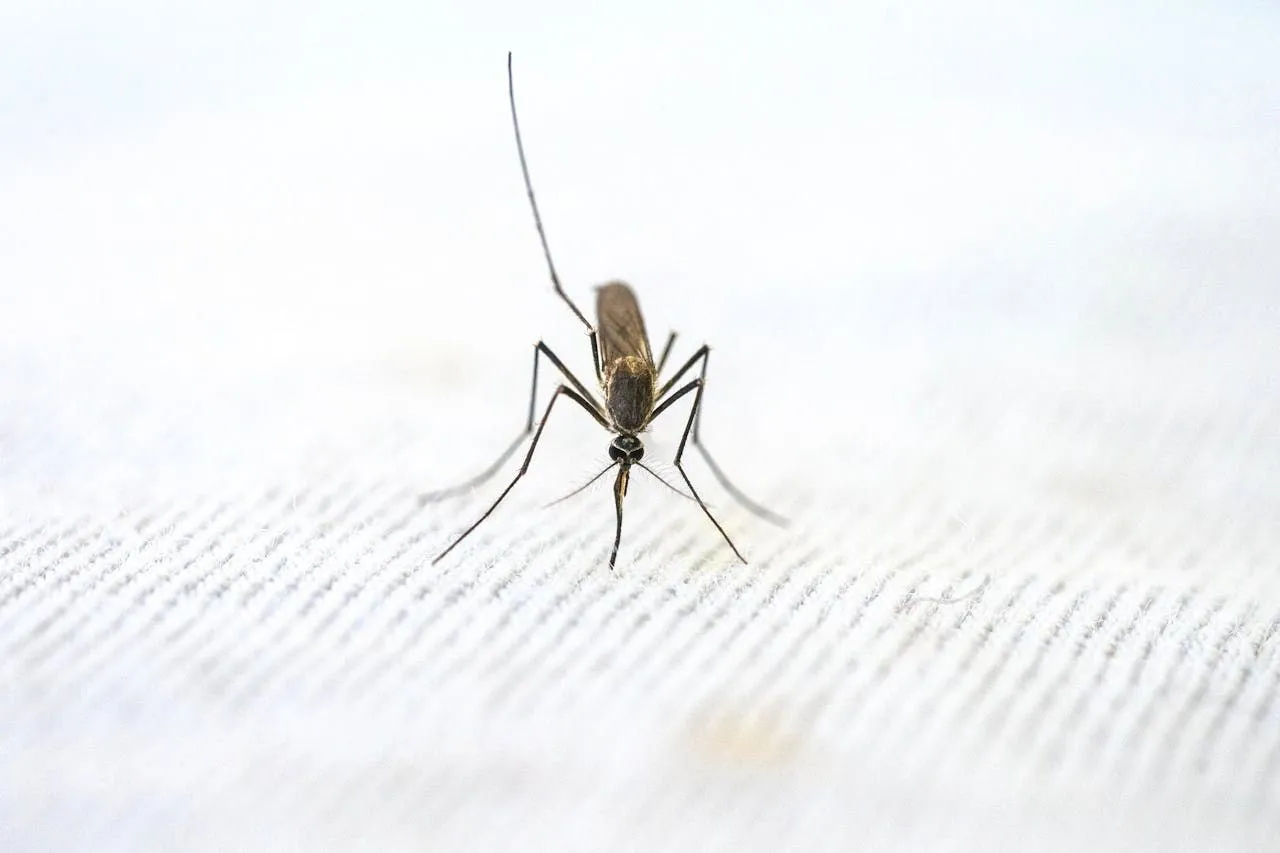
Aedes aegypti, the yellow fever mosquito, is the principal urban vector for yellow fever. This species is highly adapted to human environments — it prefers to feed on humans over other animals, breeds in artificial containers (water storage vessels, flowerpot saucers, discarded tires), and lives in close proximity to homes. Unlike most mosquitoes, Ae. aegypti takes multiple small blood meals from different hosts in a single gonotrophic cycle, making it an extremely efficient virus transmitter.
Ae. aegypti is found across tropical and subtropical regions worldwide. In the United States, its range is largely limited to Florida, the Gulf Coast, and Hawaii — a distribution that has historically contained the risk of urban yellow fever transmission within the continental U.S.
Aedes albopictus (the Asian tiger mosquito) can also transmit YFV experimentally, though it plays a secondary role compared to Ae. aegypti in natural transmission settings.
Transmission Cycles
Yellow fever virus circulates in three distinct epidemiological patterns:
| Cycle | Setting | Vectors | Reservoir Hosts | Human Risk |
|---|---|---|---|---|
| Sylvatic (jungle) | Tropical forest | Haemagogus, Sabethes spp. | Non-human primates | Forestry workers, eco-tourists |
| Intermediate (savanna) | Semi-humid African savanna | Aedes spp. (multiple) | Humans and primates | Rural communities |
| Urban | Cities | Aedes aegypti | Humans | Entire urban population |
The urban cycle is the most explosive. When YFV escapes from the sylvatic cycle and reaches a city with a large unvaccinated population and high Ae. aegypti density, the conditions for a major epidemic exist. The 2016–2019 yellow fever outbreaks in Angola, Democratic Republic of Congo, and Brazil underscored how quickly the urban cycle can emerge.
Geographic Distribution
According to the WHO, yellow fever is endemic in:
- Sub-Saharan Africa: 34 countries, from Senegal and Mali in the west to Ethiopia and Tanzania in the east. Africa accounts for approximately 90% of global yellow fever cases.
- Tropical South America: 13 countries, primarily Bolivia, Brazil, Colombia, Ecuador, and Peru. The vast majority of cases occur in remote jungle settings among unvaccinated workers and travelers.
Yellow fever is not present in Asia, despite the presence of competent Ae. aegypti populations across the continent — a geographic anomaly that researchers attribute to historical factors, cross-protective immunity from related flaviviruses, and the success of vaccination programs in initially controlling introduction events.
Symptoms and Clinical Course
Yellow fever has an incubation period of 3 to 6 days after the infectious mosquito bite. The clinical course unfolds in two phases:
Acute phase (lasts 3–4 days):
- Sudden onset of fever, headache, back pain, myalgia (muscle aches), nausea, and vomiting
- Bradycardia (slow heart rate) disproportionate to the fever — a classic sign known as Faget's sign
- Most patients recover completely at this stage
Toxic phase (occurs in 15% of patients):
- High fever returns after a brief remission period
- Jaundice (yellowing of skin and eyes from liver damage)
- Dark urine, abdominal pain, and hemorrhagic manifestations (bleeding from multiple sites)
- Renal failure
- Case-fatality rate in this phase: 20–50%
There is no antiviral treatment for yellow fever. Management is supportive — maintaining hydration, managing fever, and treating complications as they arise. This makes prevention through vaccination and mosquito control the only reliable strategy.
The Yellow Fever Vaccine
The 17D yellow fever vaccine, developed in the 1930s, is one of the most effective vaccines ever produced. A single dose provides immunity in more than 99% of recipients and is considered protective for life by the WHO (though some countries still require a booster every 10 years for entry).
The vaccine is a live attenuated (weakened) virus and is not recommended for:
- Infants under 6 months of age
- Pregnant women (unless travel to endemic areas is unavoidable)
- People with severe egg allergies
- Immunocompromised individuals
Several countries with active yellow fever risk require proof of vaccination via an International Certificate of Vaccination or Prophylaxis (ICVP, also called the "Yellow Card") for entry. The CDC maintains a current list of countries with yellow fever risk and vaccination requirements for travelers.
Prevention for Travelers
For anyone traveling to endemic regions in Africa or South America, yellow fever prevention involves two layers:
Vaccination: Get vaccinated at least 10 days before departure at a CDC-approved yellow fever vaccination center, as immunity takes approximately 10 days to develop. Bring your ICVP documentation.
Mosquito protection: Ae. aegypti bites during the day, so standard dusk-and-dawn precautions are insufficient. Use a mosquito repellent containing DEET (at least 20%), wear long sleeves and pants, and stay in accommodations with air conditioning or screened windows. Mosquito nets treated with permethrin provide additional protection in high-risk settings.
The CDC also recommends that travelers to endemic areas review their entire vaccination record before departure, as yellow fever immunization is often administered alongside hepatitis A, typhoid, and other travel vaccines.
Yellow Fever Risk in the United States
The United States has not experienced an urban yellow fever epidemic since 1905, when New Orleans had its last major outbreak. Vector control campaigns targeting Ae. aegypti, combined with widespread vaccination of military personnel during World War II, essentially eliminated domestic transmission risk.
Today, imported cases occur sporadically in unvaccinated U.S. travelers returning from endemic areas. The presence of Ae. aegypti in Florida and Gulf Coast states means that a theoretical risk of local spread exists from returning viremic travelers — a concern that public health officials monitor carefully following any cluster of imported cases.
In my 15 years of pest management in central Florida, yellow fever is not a disease I've had to address directly in client consultations. But every time I see Ae. aegypti breeding in a flowerpot saucer outside a home — which happens regularly in this climate — I'm reminded that the infrastructure for transmission exists. The reason we don't have yellow fever circulating in Florida is vaccination coverage and decades of vector surveillance, not the absence of the mosquito.
Yellow fever is a preventable disease with a proven, durable vaccine. For travelers to endemic regions, vaccination is the single most important protective step. Mosquito avoidance strategies provide additional protection against this and a half-dozen other mosquito-borne diseases that share the same Aedes vector.
Solutions and Actions
Yellow fever treatment is supportive--there is no specific antiviral therapy. Most patients with mild yellow fever recover without intervention. In severe cases with hepatic involvement (jaundice, elevated transaminases), renal failure, or hemorrhagic manifestations, intensive care monitoring is required. For travelers returning from endemic regions with fever, jaundice, or other systemic symptoms within 6 to 10 days of potential exposure, yellow fever should be included in the differential diagnosis; inform treating physicians of travel history and vaccination status. Yellow fever is a notifiable disease in the United States; confirmed cases should be reported to public health authorities immediately. Persons who develop febrile illness after potential Aedes mosquito exposure in an endemic area should avoid further mosquito bites during the acute viremic phase to prevent amplification of local transmission.
Prevention
Vaccination is the cornerstone of yellow fever prevention. The yellow fever vaccine (YF-Vax) is a live attenuated vaccine that confers immunity in the large majority of recipients; for most healthy adults, a single dose provides lifelong protection. Vaccination is required for entry into many endemic countries and is strongly recommended for travel to areas where yellow fever is endemic or epidemic in Africa and South America. The vaccine is administered only at designated Yellow Fever Vaccination Centers. For travelers who cannot receive the live attenuated vaccine due to age, immunosuppression, or allergy, mosquito avoidance is the primary protection strategy: apply EPA-registered repellent (DEET 20-30%, picaridin) to all exposed skin, treat clothing with 0.5% permethrin, and use bed nets in sleeping areas without reliable screening. Review current CDC destination-specific yellow fever risk maps before any travel to endemic regions.
Frequently Asked Questions
Do I need a yellow fever vaccine to travel to South America?
It depends on your specific destination. Countries like Brazil, Bolivia, Peru, and Colombia have areas with active yellow fever risk, and some neighboring countries require proof of vaccination for travelers arriving from endemic areas. Check the CDC traveler's health website for the most current destination-specific requirements before your trip.
Can yellow fever spread in the United States?
While the virus is not currently circulating domestically, Aedes aegypti — the primary vector — is present in Florida, Gulf Coast states, and Hawaii. A returning viremic traveler who is bitten by Ae. aegypti in those areas creates a theoretical chain of transmission. This risk is actively monitored by public health authorities, and rapid response protocols are in place for imported cases.
Is jaundice always present in yellow fever?
No. Jaundice is a hallmark of the severe "toxic phase" of yellow fever, but only about 15% of infected people reach this stage. The majority of symptomatic infections cause a self-limiting febrile illness and full recovery. Jaundice signals liver involvement and a significantly higher risk of fatal outcome.
Why is Aedes aegypti such an efficient yellow fever vector?
Aedes aegypti lives close to people, breeds in small artificial containers around homes, and often takes several small blood meals from different people in one egg-laying cycle. That combination gives the virus repeated chances to move from an infected traveler or resident into additional human hosts.
Continue reading:
The Complete Guide to Mosquitoes: Identification, Prevention & Control →Sources & Further Reading
- About Mosquitoes — U.S. Centers for Disease Control and Prevention
- Insect Repellents Use and Safety — U.S. Environmental Protection Agency
- Vector-Borne Diseases — World Health Organization