Part of the The Complete Guide to Ants: Identification, Prevention & Removal guide.
Tawny crazy ants have a quality that sounds almost like science fiction: they can neutralize fire ant venom. This biochemical adaptation gives Nylanderia fulva a significant competitive advantage over fire ants, and it helps explain how a species native to South America has managed to displace fire ants across large stretches of the Gulf Coast in just a few decades.
For a comprehensive overview, see our Complete Guide to Ants.
Identification
Tawny crazy ants are named for their reddish-brown (tawny) coloring and erratic, unpredictable movement. Workers are uniformly small — 1.5 to 2.6 mm — with no size differentiation between castes. They're covered in long, coarse hairs that are visible under a hand lens. Like other crazy ants, their antennae are disproportionately long relative to their body.
The reddish-brown color distinguishes tawny crazy ants from the related longhorn crazy ant (Paratrechina longicornis), which is darker and lacks the tawny hue. Both species share the same erratic movement, but N. fulva tends to occur in far greater densities.
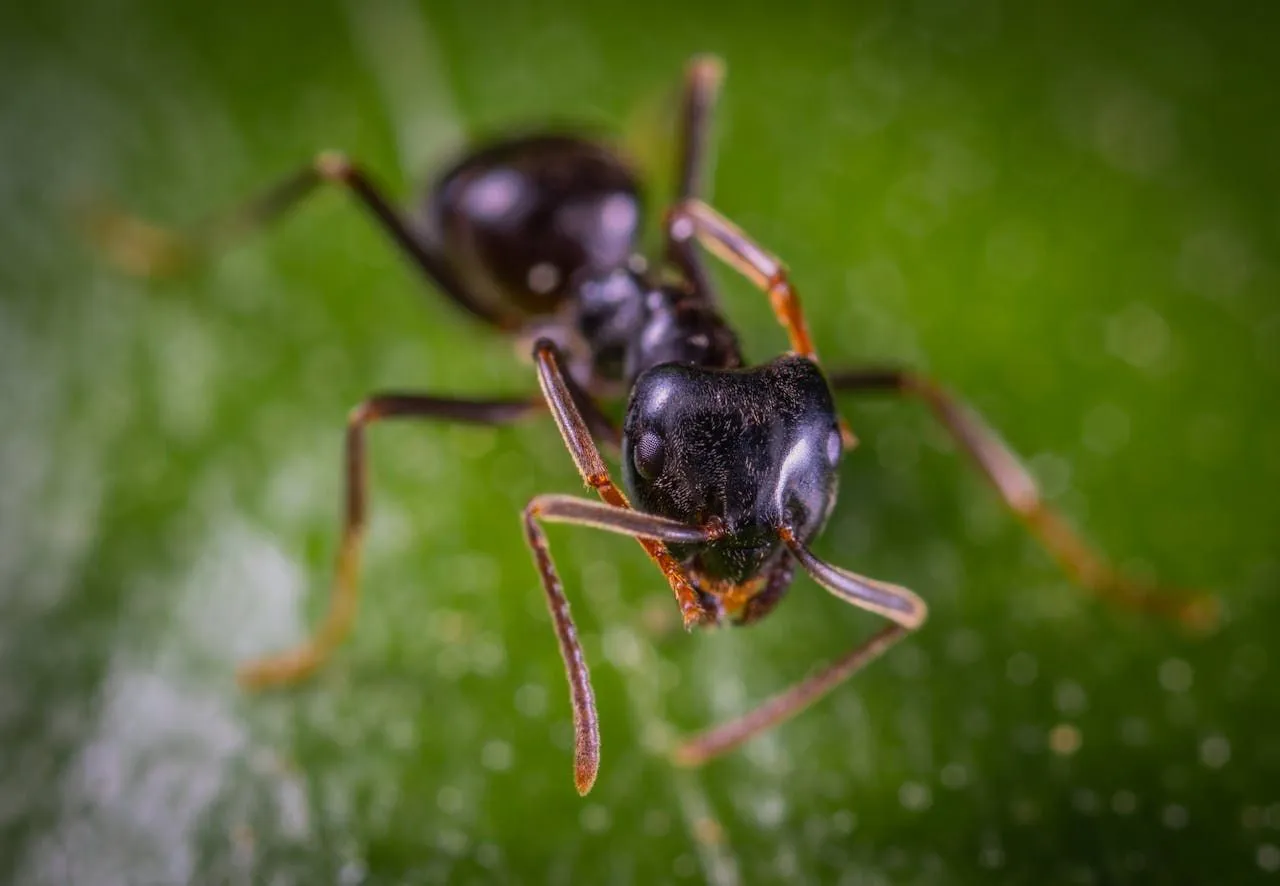
When populations peak, tawny crazy ants can be present in staggering numbers. Reports from Texas and Florida describe foraging masses covering the ground in a writhing sheet, overwhelming livestock, entering and shorting out electrical equipment, and filling structures. According to the Texas A&M AgriLife Extension, this species has become one of the most problematic urban and agricultural pests in the Gulf Coast region.
Range and Spread
First documented in the U.S. in the early 2000s near Houston, Texas, tawny crazy ants have since spread through much of coastal Texas, Louisiana, Mississippi, Alabama, Georgia, and Florida. They thrive in warm, humid conditions and are largely confined to the Gulf Coast climate zone. Climate modeling from the USDA suggests the species may expand northward as temperatures rise.
Spread occurs primarily through human transport: potted plants, landscaping soil, moving trucks, and containerized freight. Once established in a new area, the species rapidly builds enormous populations before most residents are even aware of its presence.
Nesting Habits and Habitat
Tawny crazy ants are opportunistic nesters with almost no habitat preferences — which is a significant part of what makes them so hard to manage. They'll nest in dry soil, moist soil, under rocks, inside decaying wood, in leaf litter, and within the cavities of living plants. Indoors, nests appear inside wall voids, beneath flooring, in insulation, and inside electrical equipment enclosures.
Unlike fire ants, which build conspicuous dome-shaped mounds in open areas, tawny crazy ants produce no visible surface structure. The colony footprint is diffuse — a large infestation may have dozens of loosely connected nesting pockets spread over an area of hundreds of square feet. This distributed structure is one reason why treating individual nest sites is so ineffective against this species.
Nesting density is highest near moisture. In Gulf Coast counties, areas near retention ponds, drainage ditches, and irrigated landscaping support the largest populations. During dry periods, foraging activity near water sources — including pool decks, pet water bowls, and leaking outdoor faucets — increases sharply as workers seek moisture for the colony. Eliminating supplemental moisture near structures is one of the few proactive steps that consistently reduces foraging pressure.
Why They Outcompete Native Ants
Tawny crazy ants don't just occupy territory vacated by fire ants — they actively displace competitors through sheer numerical superiority. A single tawny crazy ant supercolony can have millions of workers, vastly outnumbering any native ant species in the same area. Workers swarm and kill native queens, overwhelm food sources before competitors can recruit, and physically exclude other ant species from nesting sites.
According to UF IFAS Extension, the ecological impact extends beyond other ant species. Ground-nesting arthropods, small reptiles, and even bird eggs are vulnerable to mass foraging swarms. In areas with established tawny crazy ant populations, biodiversity surveys consistently show sharply reduced native invertebrate diversity.
Why They're So Difficult to Control
Supercolony Structure
Tawny crazy ants form polygyne supercolonies — multiple queens, no territorial boundaries between nests, and millions of workers across connected nesting sites. Treating a single nest has minimal impact. New queens can simply repopulate treated areas from adjacent satellite colonies.
Chemical Venom Neutralization
Research published through NIH confirmed that tawny crazy ants produce formic acid, which they apply to their bodies to detoxify fire ant venom after being stung. This mechanism is rare among insects and gives N. fulva a substantial advantage in direct competition with fire ants — workers attacked by fire ants can recover and continue foraging after grooming themselves with the neutralizing secretion.
Reduced Bait Sensitivity
Tawny crazy ants show reduced sensitivity to some conventional ant baits. Their dietary preferences shift frequently, making it difficult to identify an attractant they'll consistently recruit to. They've shown strong aversion to some granular baits that work reliably against fire ants.
Ecological Impact
The displacement of fire ants by tawny crazy ants is one of the more surprising ecological dynamics in U.S. pest management. While most homeowners would prefer fewer fire ants, N. fulva creates a different set of problems.
| Impact Category | Fire Ants | Tawny Crazy Ants |
|---|---|---|
| Sting / bite risk | Painful, medically significant | Bite only, minor |
| Electrical equipment damage | Occasional | Frequent and severe |
| Population density | Mound-based, moderate | Extremely high |
| Native species displacement | Moderate | Severe |
| Agricultural damage | Significant | Significant |
| Control difficulty | Moderate | High |
Tawny crazy ants have been documented killing ground-nesting birds and small lizards by overwhelming them in sheer numbers. According to UF IFAS Extension, they threaten native ant diversity and disrupt soil ecosystems wherever they establish.
Control Options
Baiting
The EPA recommends slow-acting bait formulations as the primary tool for crazy ant management. Indoxacarb and hydramethylnon baits have shown the most consistent results against N. fulva. Offer small quantities of both sugar-based and protein-based formulations first to determine current dietary preference before deploying at scale.
Persistence is essential. Because colonies are enormous and polygyne, bait treatment may need to continue for several months before population levels noticeably decline. Replace bait regularly — tawny crazy ants reject stale or contaminated bait quickly.
Perimeter Treatments
Fipronil-based perimeter treatments applied around the structure's foundation can significantly reduce indoor intrusion. Non-repellent formulations are more effective than repellents because foragers cross the treated zone and carry the active ingredient back into the colony before dying.
Professional Intervention
Given the scale of most tawny crazy ant infestations, professional pest control is strongly recommended. Licensed applicators have access to higher-concentration formulations and can treat the surrounding property systematically, which is often necessary to achieve meaningful suppression.
What Doesn't Work
Contact sprays kill visible ants but have zero impact on queens, deep nest chambers, or the broader supercolony. Repellent sprays simply displace foraging activity to an untreated area. Boiling water is impractical at the population densities typical of this species.
In my 15 years of pest management work, I've only encountered tawny crazy ants in the field a handful of times compared to fire ants or carpenter ants, but each case was memorable. One homeowner in Gainesville showed me an air conditioning unit where the interior was completely packed with ants — thousands of them, having apparently shorted out the control board. The damage wasn't from venom or biting; it was pure biomass.
Tawny crazy ants are genuinely difficult to eliminate once they've established at high density. The most realistic goal for most homeowners is suppression — keeping populations low enough to protect property and reduce indoor intrusions — rather than full eradication.
Main Causes
Indoor ants activity typically traces to outdoor colonies in mulch beds, lawn soil, decking voids, or wall cavities near the foundation. Scouts enter through gaps under doors, foundation cracks, utility penetrations, and damaged weatherstripping when food residue, water from leaks, or warmth from heating runs is available inside. Pheromone trails reinforce within hours of a successful foraging trip, drawing dozens to hundreds of workers along the same route. Heavy rain, drought, or disturbance to an outdoor nest pushes whole colonies inside in pulses. Sweet residue on counters, unsealed pantry items, pet food bowls left out overnight, and leaking pipes are the most common triggers, and the closer an outdoor colony sits to the structure, the harder the pressure becomes to manage.
How to Identify
Confirm ants are present by tracking activity rather than relying on a single sighting. Look for steady two-way trails along baseboards, counter edges, window frames, and utility penetrations, and follow the trail back to where it enters the structure. Size, color, and antennae shape distinguish the species: tiny dark ants attracted to sweet residue are usually odorous house ants or Argentine ants, large black ants near sawdust point to carpenter ants, tiny pale yellow ants scattered throughout a building indicate Pharaoh ants, and red dome mounds outdoors signal fire ants. Place a drop of honey or peanut butter near suspected activity and check at thirty minutes; aggregation around the bait confirms the species and food preference.
Risk and Severity
Risk varies sharply by species. Carpenter ants tunnel into structural wood and can cause meaningful damage if a colony goes unaddressed for years, particularly in moisture-compromised framing. Pharaoh ants contaminate food and medical supplies and are documented carriers of pathogens in hospital settings. Fire ants pose direct stinging hazards to children, pets, and anyone with venom allergy, with rare but serious anaphylactic reactions documented. Most nuisance species — odorous house ants, Argentine ants, pavement ants — present primarily a food contamination and aesthetic concern rather than a medical or structural one. Severity scales with colony size, proximity to occupied areas, and household members at elevated risk (small children, immunocompromised individuals, anyone with prior anaphylactic reactions to insect venom).
Solutions and Actions
Effective ant control combines bait, perimeter exclusion, and sanitation rather than relying on contact sprays. Identify the species first because bait selection depends on the colony's current dietary preference — sweet baits for odorous house ants and Argentine ants, protein-based or grease baits for thief ants, multi-bait stations for opportunistic species. Place bait stations directly on active trails, not in random locations, and allow workers to carry the slow-acting active ingredient back to the colony untouched — avoid spraying anywhere near bait. Treat outdoor satellite nests within twenty feet of the structure with a non-repellent residual. Seal entry points only after bait has had time to reach the colony, otherwise foragers seal their access while the colony continues producing replacements.
Prevention
Long-term prevention combines exclusion, sanitation, and outdoor colony management. Seal gaps around doors, windows, utility penetrations, and foundation cracks larger than one millimeter with caulk or expanding foam. Eliminate food access indoors by storing pantry items in sealed containers, wiping counters nightly, rinsing recyclables, and removing pet food bowls overnight. Address moisture by repairing leaks, insulating sweating pipes, and improving ventilation in damp areas. Outdoors, pull mulch and ground cover back at least twelve inches from the foundation, trim branches and shrubs away from the structure, and keep firewood off the ground and away from the house. Apply a non-repellent perimeter treatment each spring before the foraging season peaks, and inspect quarterly for new outdoor colonies near the foundation.
Frequently Asked Questions
Are tawny crazy ants dangerous to people?
They don't sting and their bites are minor. The main risks are property damage from electrical infiltration and ecological harm from displacing native species. People with livestock should be aware that large foraging masses can overwhelm confined or young animals.
How do I know if I have tawny crazy ants vs. fire ants?
Fire ants build distinctive dome-shaped mounds in open, sunny areas and sting aggressively when disturbed. Tawny crazy ants move erratically, don't build visible mounds, appear reddish-brown, and occur in much larger, more diffuse populations. See our fire ants guide for a detailed comparison.
Can I prevent tawny crazy ants from reaching my property?
Reducing mulch depth near the foundation, sealing entry points, and avoiding importing potted plants or soil from infested areas all help. Once populations are high in your area, complete prevention is difficult — focus on exclusion and perimeter treatment to protect structures and equipment.
Why are tawny crazy ants especially troublesome around outdoor equipment?
Tawny crazy ants form massive populations and often shelter in protected voids around electrical and mechanical equipment. Their numbers can overwhelm contacts, switches, and housings, so control usually requires area-wide management rather than spot treating one trail.
Continue reading:
The Complete Guide to Ants: Identification, Prevention & Removal →Sources & Further Reading
- Ants — Pest Notes — University of California Statewide IPM Program
- Texas Imported Fire Ant Project — Texas A&M AgriLife Extension
- Controlling Pests Safely — U.S. Environmental Protection Agency