Cockroach feces are more than a sign of infestation — they are an active and persistent health hazard. The proteins in cockroach droppings are among the most potent indoor allergens known, with the strongest documented link to asthma in children living in urban environments. Long after a cockroach infestation is eliminated, fecal residue left in cracks, under appliances, and inside wall voids continues to shed allergenic particles into indoor air. Cleanup is not optional.
For a comprehensive overview, see our Complete Guide to Cockroaches.
What Cockroach Feces Look Like
Identifying cockroach droppings correctly matters for two reasons: it confirms an active infestation, and it tells you where to concentrate cleanup efforts.
Small species (German cockroach, brown-banded cockroach): Droppings resemble black pepper or finely ground coffee. They are cylindrical, about 1mm long, and appear in concentrated clusters near harborage sites — inside cabinet hinges, along the back walls of lower cabinets, behind the refrigerator, and inside electrical outlets and appliances. A heavy infestation produces what looks like dark smearing in corners and seams.
Large species (American cockroach, smokybrown cockroach): Droppings are larger, blunt-ended cylinders about 3–5mm long with longitudinal ridges along the sides. They are typically brown-black and may resemble mouse droppings, though mouse droppings are larger, more tapered at both ends, and may have hair embedded.
For detailed identification guidance, see our post on cockroach droppings.
The Allergen Chemistry: Bla g Proteins
The allergenic components of cockroach feces are specific proteins, designated Bla g 1 through Bla g 11 for German cockroach allergens. Of these, Bla g 1 and Bla g 2 are the most clinically significant:
Bla g 1 is found primarily in cockroach feces and body parts. It is a midgut protein involved in digestion. Bla g 1 accumulates in settled dust and resists degradation — it remains allergenic in dried fecal deposits for months to years.
Bla g 2 is an aspartic protease (a digestive enzyme) present in cockroach feces and saliva. It is a potent allergen that sensitizes the immune system and can trigger both IgE-mediated immediate hypersensitivity reactions and persistent airway inflammation.
Additional allergens including Bla g 4 (a lipocalin), Bla g 5 (glutathione transferase), and Bla g 6 (troponin) contribute to the overall allergenic burden of cockroach-infested environments.
These proteins become airborne when fecal deposits are disturbed — by sweeping, moving furniture, opening cabinet doors, or running HVAC systems that draw air through infested wall voids. Once airborne, they remain suspended in fine particulate matter that is inhaled deep into the airways.
The Asthma Connection
The link between cockroach allergen exposure and asthma is one of the most robust findings in indoor environmental medicine. Multiple large-scale studies have established that:
- Cockroach allergen is measurable in the majority of inner-city homes
- Children sensitized to cockroach allergen and exposed to high levels in the home have significantly higher rates of asthma hospitalization, emergency department visits, and missed school days
- The Inner City Asthma Study, supported by NIH and the National Institute of Allergy and Infectious Diseases, found cockroach allergen exposure to be the single strongest environmental predictor of asthma morbidity in urban children
The mechanism is straightforward: repeated inhalation of Bla g proteins in sensitized individuals triggers IgE-mediated mast cell degranulation in the airways. This produces the bronchospasm, mucus production, and airway inflammation characteristic of asthma. The response can occur with exposures far below what would cause any visible reaction in non-sensitized people.
According to the CDC, cockroach allergens are a leading cause of indoor allergen sensitization and are considered a primary contributor to asthma disparities in low-income urban communities where cockroach infestation rates are highest.
Beyond Allergens: Pathogen Carriage in Feces
Cockroach feces also contain viable bacteria, protozoan cysts, and helminth eggs that cockroaches picked up while foraging through sewage, garbage, and decaying organic matter.
Documented pathogens found in cockroach fecal material include Salmonella spp., E. coli, Shigella spp., Staphylococcus aureus, and Streptococcus spp. In food preparation areas where cockroach droppings contaminate surfaces, these organisms can transfer to food and hands.
The WHO identifies cockroaches as mechanical vectors of enteric disease, noting that their habit of traveling between sewers, garbage, and food preparation environments makes fecal-oral disease transmission a real risk in heavily infested settings.
How to Clean Up Cockroach Feces Safely
Personal Protection First
Before cleaning cockroach fecal deposits, particularly heavy ones, wear an N95 respirator and nitrile gloves. Disturbing dried feces releases allergenic particles and potentially viable pathogens into the air. Bare-handed contact with feces and subsequent face-touching is a direct transmission pathway.
Do Not Dry-Sweep or Vacuum Without a HEPA Filter
Dry sweeping and using a standard vacuum without a HEPA filter disperses fecal particles into the air rather than removing them. Use only a HEPA-filter vacuum for initial collection of bulk material.
Wet-Wipe All Surfaces
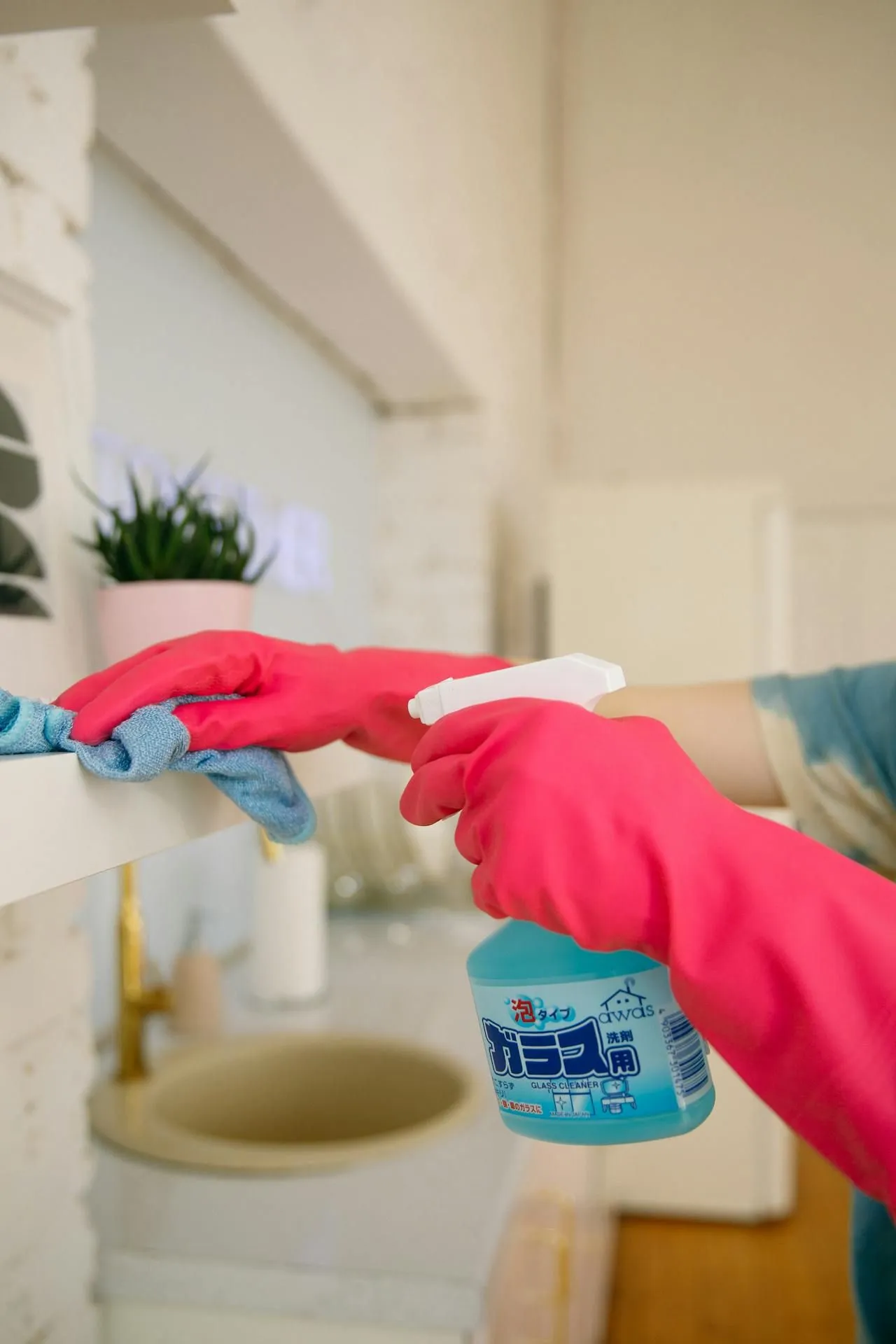
After vacuuming, wipe all surfaces with a damp cloth or paper towel moistened with warm water and a household disinfectant. Pay attention to:
- Cabinet interiors, especially hinges and seams
- The surface directly beneath and behind the refrigerator, dishwasher, and stove
- Under-sink cabinet interiors
- The backs of drawers
- Electrical outlet interiors (use a dry cloth here — no moisture)
Disinfect Food Contact Surfaces
Any surface that was in contact with cockroach feces and also contacts food should be disinfected with an EPA-registered disinfectant after wet-wiping. Allow adequate contact time per the product label before rinsing food-contact surfaces.
Dispose of Materials Properly
Paper towels, cloths, and vacuum contents used to clean feces should be sealed in a plastic bag before disposal to prevent re-release of allergens and pathogens.
| Cleanup Method | Allergen Reduction | Pathogen Reduction | Safety Notes |
|---|---|---|---|
| Dry sweeping | Poor — disperses particles | Poor | Do not use |
| Standard vacuum | Moderate — recirculates fine particles | Moderate | Use only with HEPA filter |
| HEPA vacuum | Good | Good | Best first step |
| Wet wipe with disinfectant | Excellent | Excellent for surface pathogens | Main cleanup method |
| HEPA air purifier | Good for airborne particles | Moderate | Useful adjunct during and after |
When Professional Remediation Is Needed
Light fecal deposits from a small infestation can be managed with thorough homeowner cleaning as described above. Heavy fecal contamination — such as the accumulation that occurs after a large, long-standing German cockroach infestation — presents a more serious allergen remediation challenge.
Signs that professional remediation may be warranted:
- Visible fecal staining and smearing throughout multiple cabinets and appliances
- Fecal deposits inside HVAC components, air handler units, or ductwork
- Residue inside wall voids accessible only by removing outlets or switch plates
- A household member with severe asthma or confirmed cockroach allergen sensitization who continues to have symptoms after a treated infestation
Professional allergen remediation may involve cleaning inside walls, replacing heavily contaminated insulation, cleaning HVAC ductwork, and confirming allergen levels with post-remediation environmental sampling. This is distinct from pest control treatment and requires a different scope of work.
In my 15 years of pest management work, the cleanup conversation is one I have with every client after a significant German cockroach treatment. The treatment eliminates the population, but the fecal deposits in harborage sites remain allergenic until physically removed. I've had clients with asthmatic children whose symptoms continued despite confirmed pest elimination, and in every one of those cases a thorough HEPA-vacuum and wet-wipe of all harborage areas produced measurable improvement within a few weeks.
Long-Term Allergen Reduction
Eliminating the cockroach infestation is necessary but not sufficient. To reduce allergen exposure to levels that improve respiratory outcomes:
- Treat the infestation completely — consult professional cockroach control for severe infestations
- Conduct thorough HEPA vacuuming and wet-wipe of all former harborage areas
- Seal former harborage crevices with caulk to prevent allergen re-release from inaccessible residue
- Run a HEPA air purifier in the affected room for at least several weeks
- Wash all soft furnishings, curtains, and rugs that may have accumulated settled allergen
- Follow cockroach prevention tips rigorously to prevent reinfestation and allergen reaccumulation
Main Causes
Cockroach feces accumulate in proportion to population size and how long an infestation goes unaddressed. High-activity harborage areas, primarily behind the refrigerator, inside cabinet hinges, under sinks, and within wall voids near plumbing, collect dense concentrations of droppings and shed skins. Moisture is the common thread: cockroaches concentrate where water is available, and those same moist, enclosed spaces trap fecal particles and allergens against surfaces rather than dispersing them. Poor ventilation in enclosed cabinets and wall voids worsens accumulation by preventing dilution. Multi-unit buildings compound the risk because infestations can persist in adjacent units even after a single apartment is treated, sustaining ongoing fecal exposure. The longer droppings remain without cleanup, the more allergen proteins become airborne during routine activity like opening cabinets or running fans.
Solutions and Actions
Eliminating fecal health risk requires addressing both the cockroach population and the accumulated contamination. Apply gel bait at all identified harborage points and replace it every two weeks until sticky trap monitoring shows zero catches for two consecutive weeks. Once the population is eliminated, clean droppings using a damp cloth or HEPA-filtered vacuum rather than dry sweeping, which aerosolizes allergen particles. Disinfect all affected surfaces with a food-safe disinfectant, paying particular attention to shelf liners, drawer interiors, and cabinet hinges where frass concentrates. Wash any dishes, utensils, or stored food containers that sat in contaminated areas. For severe infestations with extensive droppings inside wall voids, professional remediation may be necessary to fully reduce the allergen load to safe levels.
How to Identify
Confirm cockroaches are present through nighttime visual checks with a flashlight in kitchens, bathrooms, and around water heaters, plus sticky monitors placed flat against baseboards under sinks and behind appliances for 48 to 72 hours. German cockroach evidence is unmistakable: dark pepper-grain droppings clustered along cabinet edges and inside hinges, brown smear marks around water sources, a distinctive musty oil smell from heavy infestations, and discarded oothecae (egg cases) in corners. American and oriental cockroaches leave larger cylindrical droppings near drains and basements. Species, size mix, and droppings density indicate how established the population is and which control approach will work; treating without identification often selects the wrong strategy.
Risk and Severity
Cockroaches are significant public health pests. Cockroach allergens — proteins shed in feces, saliva, and decomposing bodies — are documented triggers for asthma attacks and allergic rhinitis, particularly in children, and the CDC identifies cockroach allergen exposure as a major contributor to pediatric asthma in urban housing. Mechanically, cockroaches walk through sewage, garbage, and decaying material before crossing food preparation surfaces and stored food, transferring Salmonella, E. coli, and other pathogens. Heavy infestations produce a characteristic musty odor that lingers in fabric and porous surfaces. Severity scales with population density, presence of children or asthmatic occupants, and how directly the infestation contacts food storage and preparation areas.
Prevention
Prevention combines structural exclusion, sanitation, and moisture control. Seal gaps around plumbing penetrations, electrical conduits, and exterior utility entries with caulk or copper mesh. Inspect grocery bags, cardboard boxes, used appliances, and electronics before bringing them inside, since this is the most common introduction route for German cockroaches in clean homes. Eliminate water access by repairing leaks, insulating sweating pipes, draining appliance drip pans, and ensuring drain p-traps stay filled to block sewer entry by larger species. Store food in hard-sided sealed containers, remove cardboard storage promptly, and clean grease accumulation behind kitchen appliances quarterly. In multi-unit housing, coordinate treatment with neighbors because shared walls and utilities allow uninterrupted reinfestation from adjacent units.
Frequently Asked Questions
How long do cockroach allergens remain active after an infestation is eliminated?
Cockroach allergens, particularly Bla g 1 and Bla g 2, are remarkably stable and can remain allergenic in dried fecal deposits and dust for months to years. Simply eliminating the cockroach population does not remove the allergen reservoir. Physical removal through HEPA vacuuming and wet-wiping of all former harborage sites is necessary to reduce allergen levels to below-threshold concentrations.
Can cockroach droppings make you sick if you touch them?
Yes, through hand-to-mouth contact. Cockroach feces contain viable bacteria including Salmonella and E. coli that can cause gastrointestinal illness if ingested. Wash hands thoroughly after any contact with areas that had cockroach activity, and before preparing or eating food. Do not touch your face while cleaning cockroach-contaminated areas.
How do I know if cockroach allergens are causing my asthma?
Allergy skin testing or specific IgE blood testing (RAST) for cockroach allergens (Bla g 1, Bla g 2) can confirm sensitization. An allergist can evaluate whether cockroach allergen is contributing to your asthma symptoms based on test results, exposure history, and symptom pattern. If you test positive for cockroach allergen sensitization, allergen reduction in the home becomes a medical priority alongside pharmaceutical management.
Is dried cockroach feces still a health concern?
Dried cockroach feces can still break apart into fine particles that become part of household dust. Those particles may contain allergens and microbial residue, so old droppings should be removed with gloves, careful damp cleaning, and HEPA vacuuming rather than brushed or swept into the air.
Sources & Further Reading
- Cockroach Allergy — American College of Allergy, Asthma & Immunology
- Cockroaches — Pest Notes — University of California Statewide IPM Program
- Integrated Pest Management Principles — U.S. Environmental Protection Agency