Part of the The Complete Guide to Ants: Identification, Prevention & Removal guide.
Ghost ants are almost translucent. Their legs and abdomen are so pale they're difficult to see on light-colored surfaces, which explains why a ghost ant infestation seems to appear from nowhere. These tiny ants — under 1.5 mm long — are a persistent indoor pest in Florida, Hawaii, and other tropical and subtropical regions, and they're notoriously hard to eliminate once established inside your home.
For a comprehensive overview, see our Complete Guide to Ants.
Identification
Ghost ants (Tapinoma melanocephalum) have an unusual two-tone appearance: a dark brown to black head and thorax contrasted against nearly transparent, pale yellow legs and abdomen. Workers are tiny — 1.3 to 1.5 mm — making them one of the smaller ant species you'll encounter indoors. They belong to the same genus as odorous house ants, and like them, produce a faint coconut-like odor when crushed.
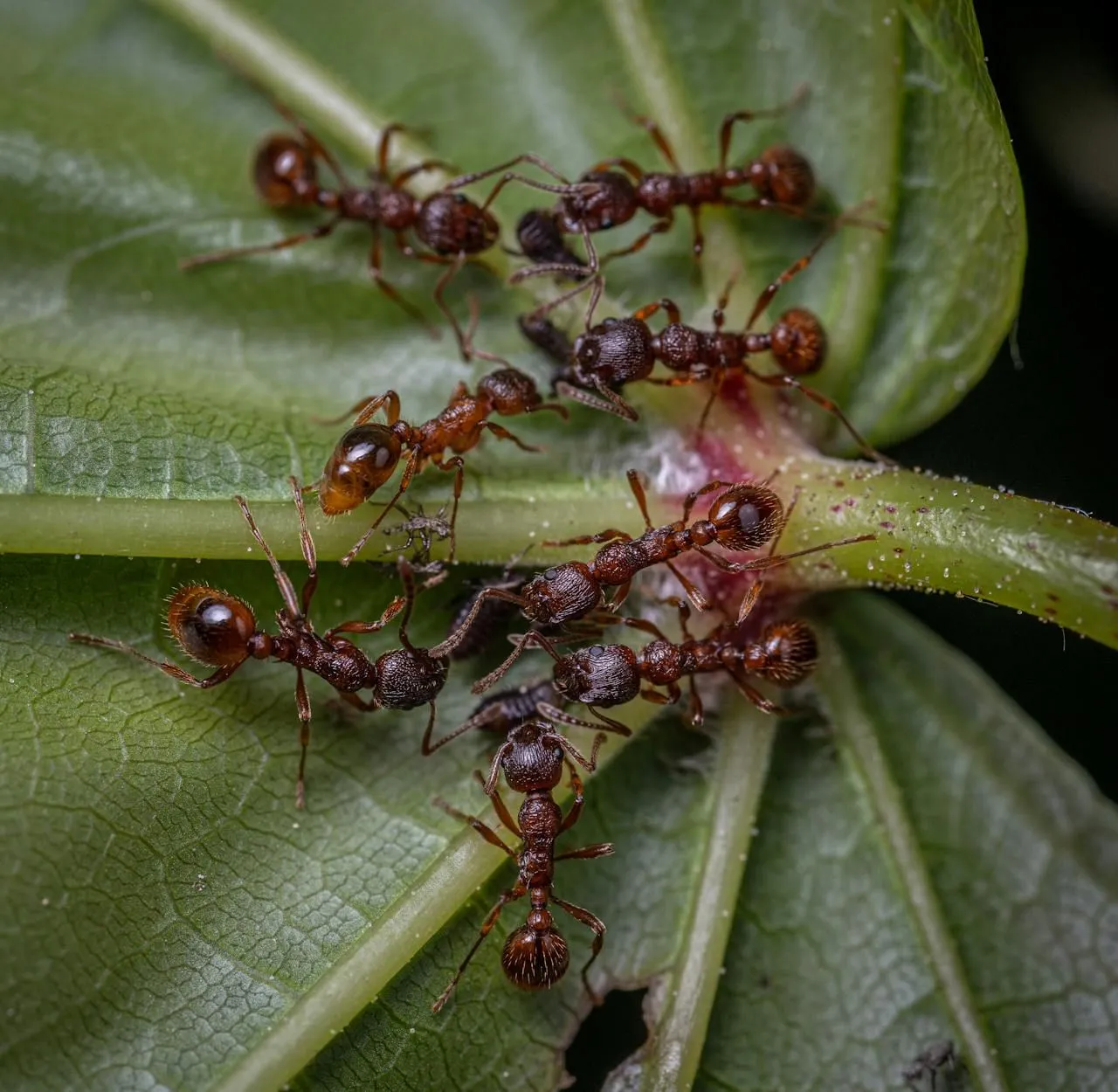
The pale abdomen can appear whitish in some lighting conditions, and the combination of dark head on a nearly invisible body gives the species its name. Unlike pharaoh ants, which are uniformly pale yellow throughout, ghost ants have a clear bicolored pattern.
According to UF IFAS Extension, ghost ants are considered a major structural and nuisance pest throughout Florida and are among the most common ants found inside homes in the state.
Biology and Behavior
Colony Structure
Ghost ant colonies are polygyne — multiple queens — and readily split (bud) into new satellite nests when disturbed. This budding behavior is the same mechanism that makes pharaoh ants so difficult to control, and it has exactly the same implication: using repellent sprays or contact insecticides can fragment one large, manageable colony into dozens of smaller, dispersed ones.
A typical ghost ant colony holds thousands of workers across multiple nesting sites, often with interconnected trails running between indoor and outdoor locations. Queens move freely between nest sites.
Diet
Ghost ants strongly prefer sweet foods. They recruit heavily to honeydew, fruit, syrup, and sugary spills in the kitchen. They also consume other insects and some protein, but sweet baits are generally the most effective because they match the colony's primary dietary drive. See our overview of what ants eat for context on how dietary preferences shift with colony stage.
Movement
Ghost ants follow pheromone trails but do so quickly and in large numbers once a food source is found. Their small size allows them to pass through gaps that would stop larger species — hairline cracks in caulk, spaces around pipes, the gap at the bottom of a door threshold. Moisture draws them to bathrooms, under kitchen sinks, and around leaky pipes.
Where Ghost Ants Nest
Ghost ants are highly adaptable nesters. In Florida, they nest both outdoors and indoors:
- Outdoors: In soil, under mulch, beneath potted plants, inside hollow plant stems, and within decomposing vegetation near the foundation.
- Indoors: Inside wall voids, under flooring, in cupboards, behind baseboards, and in the soil of houseplants. They're particularly common behind the kick plates of kitchen cabinets.
The connection between houseplants and ghost ants is worth noting — they frequently use potted plant soil as a nest site and may arrive inside the home in the first place through an infested plant brought in from outdoors.
| Trait | Ghost Ant | Pharaoh Ant | Odorous House Ant |
|---|---|---|---|
| Size | 1.3–1.5 mm | ~2 mm | 2.4–3.3 mm |
| Color | Dark head, pale body | Uniformly pale yellow | Uniformly dark brown |
| Smell when crushed | Faint coconut | None notable | Strong rotten coconut |
| Colony budding | Yes | Yes | Occasionally |
| Common habitat | Warm climates, indoors | Buildings nationwide | Buildings nationwide |
Ghost Ants in Healthcare and Food Service Settings
Ghost ants present a particular problem in healthcare settings, commercial kitchens, and food processing facilities. Their small size allows them to penetrate sterile packaging, medical supply containers, and sealed food packaging. According to the CDC, ant species capable of nesting inside buildings — including ghost ants — pose contamination risks in healthcare environments because workers forage across waste materials, then cross sterile surfaces.
In Florida hospitals and long-term care facilities, ghost ant infestations have been documented in patient rooms, pharmacies, and operating suites. Their ability to nest inside wall voids and move through plumbing conduits makes them extremely difficult to exclude from large commercial buildings.
For food service operators, ghost ants require an integrated management program that combines regular bait application, structural exclusion at all utility penetrations, and attention to moisture sources throughout the building. The EPA recommends documenting ant activity with sticky monitoring traps to identify foraging routes before placing bait, which is particularly important in large facilities where trails may span significant distances.
Residential homeowners face a simpler version of the same challenge. The key principle — bait the trail, don't spray it — applies at any scale.
Seasonal Patterns in Florida
Ghost ants are active year-round in South and Central Florida, but foraging intensity increases during the summer rainy season (June through September) and again in late winter (February through March) when outdoor conditions fluctuate. The summer peak coincides with outdoor colony growth driven by abundant moisture and food; the late-winter uptick reflects ants seeking stable indoor conditions as temperatures briefly drop.
During peak activity periods, bait stations may need refreshing every two to three days rather than weekly. Outdoor perimeter treatments should be reapplied after heavy rain events that wash residual insecticide from treated surfaces. If ghost ant pressure spikes suddenly after a major storm, flooding of outdoor nests is the likely cause — treat the exterior perimeter immediately rather than waiting for interior trail activity to develop.
Control
Why Contact Sprays Fail
Spraying visible ghost ant trails with repellent contact insecticides is the most common mistake homeowners make. The spray kills foragers but triggers colony budding, turning one nest into several. This is the same problem documented with pharaoh ants, and the EPA guidance on indoor ant management consistently recommends bait over spray for polygyne species.
Baiting
Sugar-based gel baits are the most effective tool. Place small bait stations directly on active foraging trails. Avoid wiping away trails before baiting — the trail is how workers find the bait. Don't place bait near recently sprayed areas, as residual insecticide contaminates and renders bait unacceptable to foragers.
Patience is critical. It may take one to three weeks for bait to noticeably reduce ghost ant populations.
Outdoor Treatment
Because ghost ants move freely between indoor and outdoor nesting sites, treating only the interior is rarely sufficient. Apply a perimeter treatment of non-repellent insecticide around the foundation, potted plants near the house, and any mulched areas where outdoor nesting is suspected.
Exclusion
- Caulk cracks around windows, door frames, and utility penetrations.
- Inspect potted plants before bringing them inside.
- Fix leaky pipes and address humidity under sinks and in bathrooms.
- Replace moisture-damaged door thresholds and window sills.
In my 15 years of pest management work, I've seen ghost ants show up in central Florida homes from late spring through fall, but they persist year-round indoors once established. The most reliable outcome I've achieved is a combined approach: sugar bait on active trails inside, non-repellent spray outside, and sealing the moisture sources that made the kitchen attractive in the first place.
Ghost ants are persistent, but they respond well to patient baiting. The key is resisting the urge to spray first.
Risk and Severity
Ghost ants are primarily a nuisance pest, but severity scales with indoor population size and the number of active nesting sites. A small trail to a food source is manageable with bait alone. A colony nesting inside wall voids, under flooring, or in multiple rooms across the structure requires weeks of consistent baiting and exclusion work to resolve. The greatest health concern is contamination: ghost ants forage across food prep surfaces, pet bowls, and, in healthcare settings, sterile equipment. They carry bacteria from waste and soil onto clean surfaces. A secondary risk is colony fragmentation: using repellent sprays can scatter a manageable population into multiple satellite colonies dispersed throughout the structure, multiplying the problem. Severity is best assessed not by the number of visible ants but by the extent of their indoor trail network and the number of nesting sites identified.
Prevention
Ghost ant prevention centers on removing moisture and blocking entry. Repair dripping faucets, leaky pipes under sinks, and slow drains in bathrooms and kitchens. Ghost ants track moisture, so eliminating wet surfaces removes the primary indoor draw. Inspect potted plants before bringing them inside, as houseplant soil is a common ghost ant nesting site. Caulk gaps around window frames, door thresholds, utility penetrations, and baseboard seams throughout the first floor. Outdoors, keep mulch and plant debris at least 12 inches from the foundation and treat the perimeter with a non-repellent residual insecticide in spring and late summer. Store all food in sealed containers and wipe down surfaces after cooking. Do not leave standing water in sinks or pet bowls overnight. In Florida homes with persistent ghost ant pressure, a scheduled perimeter bait application every 60 to 90 days helps prevent reestablishment after a successful interior treatment.
Main Causes
Indoor ants activity typically traces to outdoor colonies in mulch beds, lawn soil, decking voids, or wall cavities near the foundation. Scouts enter through gaps under doors, foundation cracks, utility penetrations, and damaged weatherstripping when food residue, water from leaks, or warmth from heating runs is available inside. Pheromone trails reinforce within hours of a successful foraging trip, drawing dozens to hundreds of workers along the same route. Heavy rain, drought, or disturbance to an outdoor nest pushes whole colonies inside in pulses. Sweet residue on counters, unsealed pantry items, pet food bowls left out overnight, and leaking pipes are the most common triggers, and the closer an outdoor colony sits to the structure, the harder the pressure becomes to manage.
How to Identify
Confirm ants are present by tracking activity rather than relying on a single sighting. Look for steady two-way trails along baseboards, counter edges, window frames, and utility penetrations, and follow the trail back to where it enters the structure. Size, color, and antennae shape distinguish the species: tiny dark ants attracted to sweet residue are usually odorous house ants or Argentine ants, large black ants near sawdust point to carpenter ants, tiny pale yellow ants scattered throughout a building indicate Pharaoh ants, and red dome mounds outdoors signal fire ants. Place a drop of honey or peanut butter near suspected activity and check at thirty minutes; aggregation around the bait confirms the species and food preference.
Solutions and Actions
Effective ant control combines bait, perimeter exclusion, and sanitation rather than relying on contact sprays. Identify the species first because bait selection depends on the colony's current dietary preference — sweet baits for odorous house ants and Argentine ants, protein-based or grease baits for thief ants, multi-bait stations for opportunistic species. Place bait stations directly on active trails, not in random locations, and allow workers to carry the slow-acting active ingredient back to the colony untouched — avoid spraying anywhere near bait. Treat outdoor satellite nests within twenty feet of the structure with a non-repellent residual. Seal entry points only after bait has had time to reach the colony, otherwise foragers seal their access while the colony continues producing replacements.
Frequently Asked Questions
Are ghost ants found only in Florida?
Ghost ants are established throughout Florida, Hawaii, and parts of Texas and California. They're also a major indoor pest in tropical regions worldwide. In northern states, they occasionally establish inside climate-controlled buildings but don't survive outdoors.
Do ghost ants bite?
Ghost ants can bite but are too small to break human skin or cause pain. They're not known to transmit diseases, though like any ant that forages across surfaces, they can contaminate food if allowed to access it — which is reason enough to address an indoor infestation promptly rather than tolerating low-level activity. They're a nuisance pest, not a medical concern.
What bait works best for ghost ants?
Sugar-based gel baits containing boric acid, indoxacarb, or fipronil as the active ingredient work well. Offer a small amount first to confirm the ants are actively recruiting to it before placing multiple stations throughout the area.
Why are ghost ants difficult to see until the trail is large?
Ghost ants have pale legs and abdomens that blend into light counters, tile, and walls. Their tiny size and preference for hidden moisture routes often let early activity go unnoticed until many workers are trailing to sweets or water.
Continue reading:
The Complete Guide to Ants: Identification, Prevention & Removal →Sources & Further Reading
- Ants — Pest Notes — University of California Statewide IPM Program
- Texas Imported Fire Ant Project — Texas A&M AgriLife Extension
- Controlling Pests Safely — U.S. Environmental Protection Agency