Part of the The Complete Guide to Ants: Identification, Prevention & Removal guide.
Every spring, homeowners across the country find winged insects inside their home and immediately fear the worst. Whether you're looking at flying ants or termites matters enormously — not because one is harmless (both can be problematic) but because the treatment for each is completely different. Misidentifying the two is one of the most common and costly mistakes in DIY pest control.
For a comprehensive overview, see our Complete Guide to Ants.
The Key Differences at a Glance
The fastest way to tell them apart is to examine three features: the waist, the antennae, and the wings.
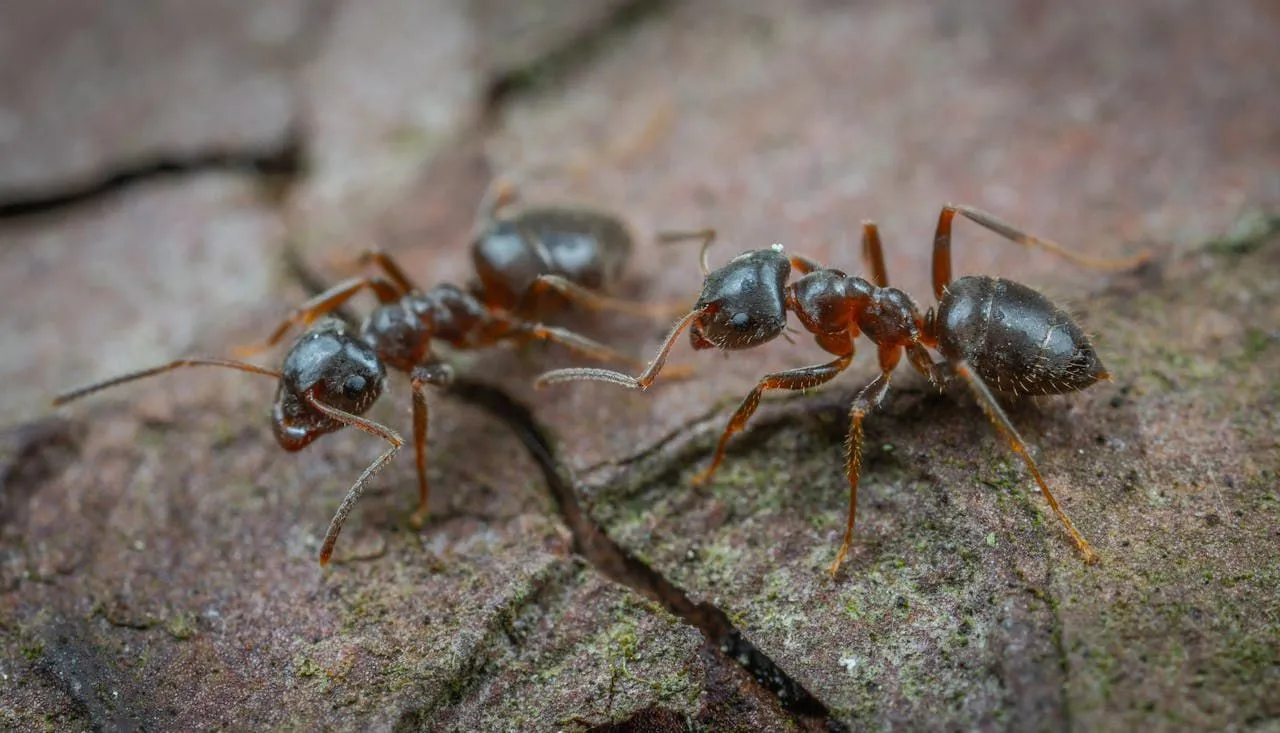
- Waist: Ants have a narrow, pinched waist (petiole) between the thorax and abdomen. Termites have a broad, straight-sided body with no visible waist constriction.
- Antennae: Ant antennae are elbowed — they bend at a sharp angle. Termite antennae are straight or gently curved, with beaded segments.
- Wings: On winged (alate) forms, ants have two pairs of wings of unequal size — the front wings are notably larger than the rear wings. Termites have two pairs of wings that are roughly equal in length and extend well beyond the abdomen.
These three features are reliable enough to make an identification without any magnification equipment.
Detailed Comparison
| Feature | Ant | Termite |
|---|---|---|
| Waist | Narrow, pinched | Broad, no constriction |
| Antennae | Elbowed, bent | Straight or beaded |
| Wing pairs | Unequal length | Equal length |
| Wing shedding | Yes, after swarming | Yes, after swarming |
| Color (swarmer) | Black, brown, reddish | Pale to dark brown |
| Behavior in wood | Excavate galleries | Consume wood from inside |
| Wood damage evidence | Sawdust-like frass | Mud tubes, hollow wood |
| Workers visible outside | Yes, regularly | Rarely |
Swarmers: The Most Commonly Confused Stage
Both ants and termites produce winged reproductive forms called swarmers (or alates), which emerge from mature colonies to mate and found new colonies. Swarms typically occur in spring, triggered by warmth and rainfall. Seeing a swarm indoors is alarming regardless of species, but what you do next depends entirely on which insect you have.
Flying ants indoors usually indicate a mature ant colony nesting in or near the structure. The ants swarm, find mates, and the fertilized queens disperse to start new colonies. You may see hundreds clustering at a window trying to reach light.
Termite swarmers are more concerning because their presence indoors almost always means an active termite colony is inside or beneath the structure. Termite swarmers are weak fliers and rarely travel far from the colony before landing, shedding their wings, and seeking a mate.
According to the NPMA, termite damage costs U.S. property owners approximately $5 billion annually — more than fires and storms combined in many years. Correct identification is genuinely consequential.
How to Read the Damage
Carpenter Ant Damage
Carpenter ants excavate wood to create galleries for nesting. They push the excavated material out of the nest as coarse, sawdust-like frass that often accumulates below entry points or is pushed through kick-out holes. The galleries inside are clean and smooth, following the wood grain.
Termite Damage
Termites consume wood from the inside out, leaving a thin veneer of exterior wood or paint intact. Unlike carpenter ants, they leave no frass outside the wood. Subterranean termites build mud tubes — narrow, muddy tunnels running from soil to wood — that serve as protected travel corridors. Damaged wood sounds hollow when tapped and may collapse when probed.
Drywood termites, common in Florida and the Gulf Coast, don't build mud tubes but leave small fecal pellets that look like coffee grounds near infested wood. If you're concerned about either scenario, see our overview of structural damage from ants for context on how to assess severity.
The Field Inspection Checklist
When you've found damaged wood and aren't certain which insect is responsible, a systematic inspection narrows the possibilities quickly.
Check the frass: Tap the suspect wood and look below it. Coarse, fibrous sawdust-like material with small insect fragments points to carpenter ants. Fine, pellet-like granules resembling sand or coffee grounds point to drywood termites. No visible frass but hollow-sounding wood points to subterranean termites — their workers consume frass rather than expelling it.
Look for mud tubes at the foundation: Walk the perimeter at ground level and check the inside face of foundation walls in any crawlspace. Pencil-width mud tubes running from soil to wood confirm subterranean termites. No ant species produces mud tubes.
Probe the wood: A flathead screwdriver pushed into suspect wood tells you immediately how far damage extends. Carpenter ant galleries run parallel to the grain and are clean and smooth. Termite damage crosses grain lines and the wood surface crumbles under pressure.
Assess moisture: Both carpenter ants and subterranean termites strongly prefer wood with elevated moisture content. A pin-type moisture meter is inexpensive and worth using — wood at or above 19% moisture content is high-risk territory. Drywood termites are the exception; they infest wood at normal moisture levels, which is one reason they're common in Florida and the Gulf Coast.
According to UC IPM, combining visual evidence with a moisture reading gives a far more reliable field diagnosis than appearance alone.
Why This Matters
Treating for carpenter ants when you have termites — or vice versa — wastes time and money. Ant baits don't work on termites, and termite bait stations are ineffective against ants. If you find structural damage and aren't certain which insect is responsible, collect a specimen or call a professional before committing to treatment.
When You Find Swarmers Indoors
- Collect several specimens in a sealed container or bag.
- Examine them under good lighting using the three-feature checklist above — waist, antennae, wings.
- If you suspect termites, don't disturb any mud tubes or emergence holes — preserving the evidence helps a professional assess the extent of the infestation.
- If you suspect flying ants, check for an active colony near the swarm site. Indoor swarmers often originate from a nest inside a wall or crawlspace.
The EPA recommends consulting a licensed pest control professional before treating for termites, as effective termite control typically requires professional-grade methods and equipment not available to consumers.
Behavioral Clues Beyond Appearance
Ants are regularly visible as workers foraging on open surfaces — countertops, along baseboards, in trails outdoors. Termite workers almost never appear on open surfaces. They remain hidden in soil, wood, or mud tubes. If you're seeing large numbers of small pale insects moving on an open surface, they're more likely ants.
According to UC IPM, the presence of mud tubes on a foundation wall is one of the most definitive signs of subterranean termite activity — no ant species produces anything resembling mud tubes.
In my 15 years of pest management work, I've been called to dozens of homes where the homeowner was certain they had termites and found carpenter ants, or certain they had ants and found drywood termites. The stakes are real: termite treatment is a significant expense, and acting on a misidentification is both frustrating and costly. Collect the specimen first — every time.
Correct identification is the single most important step. Once you know what you're dealing with, both ant and termite problems are manageable with the right approach.
Solutions and Actions
Once you have correctly identified whether you are dealing with ants or termites, the treatment approach differs significantly. For ants: remove the colony using species-appropriate bait placed on active trails. For flying ants emerging indoors from a carpenter ant colony, locate the moisture-damaged nest site and treat with insecticidal dust; fix the moisture source causing wood decay. For termites: contact a licensed termite control company. Termite treatment requires specialized products (liquid termiticides, termite bait systems, or fumigation) that are not effective for ant control, and vice versa. Do not use DIY spray products for a suspected termite problem. Confirming the pest first is essential: misidentifying termites as ants and treating accordingly will allow structural termite damage to continue.
Prevention
Prevent both ants and termites by eliminating their shared requirements: moisture-damaged wood and soil contact with wood. Repair all wood rot promptly, particularly around windows, fascia boards, and structural members near the ground. Ensure proper drainage away from the foundation. Maintain a 6-inch clearance between soil and wood siding or structural members. Remove wood debris, tree stumps, and dead roots from near the structure and store firewood away from the house. Apply an annual perimeter insecticide treatment and schedule a professional termite inspection every 1-2 years in high-risk areas, particularly in the southeastern United States.
Main Causes
Indoor ants activity typically traces to outdoor colonies in mulch beds, lawn soil, decking voids, or wall cavities near the foundation. Scouts enter through gaps under doors, foundation cracks, utility penetrations, and damaged weatherstripping when food residue, water from leaks, or warmth from heating runs is available inside. Pheromone trails reinforce within hours of a successful foraging trip, drawing dozens to hundreds of workers along the same route. Heavy rain, drought, or disturbance to an outdoor nest pushes whole colonies inside in pulses. Sweet residue on counters, unsealed pantry items, pet food bowls left out overnight, and leaking pipes are the most common triggers, and the closer an outdoor colony sits to the structure, the harder the pressure becomes to manage.
How to Identify
Confirm ants are present by tracking activity rather than relying on a single sighting. Look for steady two-way trails along baseboards, counter edges, window frames, and utility penetrations, and follow the trail back to where it enters the structure. Size, color, and antennae shape distinguish the species: tiny dark ants attracted to sweet residue are usually odorous house ants or Argentine ants, large black ants near sawdust point to carpenter ants, tiny pale yellow ants scattered throughout a building indicate Pharaoh ants, and red dome mounds outdoors signal fire ants. Place a drop of honey or peanut butter near suspected activity and check at thirty minutes; aggregation around the bait confirms the species and food preference.
Risk and Severity
Risk varies sharply by species. Carpenter ants tunnel into structural wood and can cause meaningful damage if a colony goes unaddressed for years, particularly in moisture-compromised framing. Pharaoh ants contaminate food and medical supplies and are documented carriers of pathogens in hospital settings. Fire ants pose direct stinging hazards to children, pets, and anyone with venom allergy, with rare but serious anaphylactic reactions documented. Most nuisance species — odorous house ants, Argentine ants, pavement ants — present primarily a food contamination and aesthetic concern rather than a medical or structural one. Severity scales with colony size, proximity to occupied areas, and household members at elevated risk (small children, immunocompromised individuals, anyone with prior anaphylactic reactions to insect venom).
Frequently Asked Questions
Can ants and termites infest the same house?
Yes, and it's more common than most homeowners realize. Carpenter ants are often attracted to wood that termites have already softened with moisture. Treating one doesn't address the other, so a thorough inspection of any structural damage is worth doing. If you're seeing swarmers, frass, and active wood damage simultaneously, a professional inspection for both pests at the same time saves both time and money.
Do flying ants mean I have a termite problem?
No. Flying ants indicate a mature ant colony nearby, not termites. Check the three features — waist, antennae, wings — to confirm which insect you're seeing. But flying ants indoors do mean a colony is nesting close by and warrants investigation.
What should I do if I find a termite swarm inside my home?
Collect a few specimens to confirm identification, then contact a licensed termite control professional. Don't disturb mud tubes or emergence holes before the inspection. Termite treatment requires professional-grade products and methods that aren't available over the counter.
Why is wing shape important when comparing flying ants and termites?
Winged ants have front wings that are larger than the back wings, while termite swarmers have two pairs of nearly equal-length wings. That difference, combined with antenna shape and waist size, helps separate a nuisance ant swarm from a possible termite warning sign.
Quick answer: how to use the termite guides
Start with the sign you can actually see: mud tubes, wing piles, soft deck boards, frass, or swarmers near windows. If the wood sounds hollow or breaks apart easily, treat it as a possible termite problem and arrange a professional inspection before repairing or covering the area.
When termite stakes are useful
Termite stakes are best used as monitoring tools around decks, fences, sheds, and other outdoor wood. They can help flag foraging activity, but they do not replace a full inspection inside walls or structural wood. If you want a simple outdoor monitor, Spectracide Terminate Termite Detection & Killing Stakes are one option to compare before calling a pro. As an Amazon Associate, we earn from qualifying purchases, at no extra cost to you.
Termites and decks
For deck questions, check joists, posts, ledger boards, and any wood touching soil first. A stained top board can hide damage below, so probe gently with a screwdriver instead of judging by surface color alone.
Continue reading:
The Complete Guide to Ants: Identification, Prevention & Removal →Sources & Further Reading
- Ants — Pest Notes — University of California Statewide IPM Program
- Texas Imported Fire Ant Project — Texas A&M AgriLife Extension
- Controlling Pests Safely — U.S. Environmental Protection Agency