Part of the The Complete Guide to Ants: Identification, Prevention & Removal guide.
Florida is a remarkable place to study ants. The warm, humid climate supports more ant species than most of the continental United States, including several invasive species that have established here precisely because the environment matches their tropical origins. If you're dealing with ants in Florida, there's a good chance you're dealing with a species that requires a specific control approach — and what works for ants in Ohio may not work here.
For a comprehensive overview, see our Complete Guide to Ants.
Why Florida Has So Many Ants
Florida's climate — year-round warmth, high humidity, and mild winters — eliminates the seasonal dormancy period that suppresses ant populations in northern states. Colonies don't die back in winter; they simply forage less aggressively during brief cool spells before resuming normal activity. This allows colonies to grow larger over multiple years and increases pressure on structures continuously.
Florida is also a major entry point for invasive species via international shipping and trade. According to UF IFAS Extension, Florida hosts at least 20 non-native ant species — more than any other state in the U.S.
The Most Common Ants in Florida
Fire Ants (Solenopsis invicta)
Red imported fire ants are present in virtually every Florida county. These reddish-brown ants build dome-shaped mounds in sunny, open areas — lawns, roadsides, parks, and school grounds. Their sting is painful and medically significant for sensitive individuals. See our full guide on fire ants for identification, biology, and treatment options.
Ghost Ants (Tapinoma melanocephalum)
Ghost ants rank among the most common indoor ant pests in Florida. They're tiny (under 1.5 mm), with a dark head and nearly transparent pale body, and they prefer sweet foods and moist environments. They're especially common in kitchens and bathrooms across South and Central Florida. Never use repellent sprays — their polygyne colony structure causes budding, fragmenting one infestation into many.
Pharaoh Ants (Monomorium pharaonis)
Pharaoh ants are pale yellow, tiny (~2 mm), and notoriously hard to control. They nest inside buildings — in wall voids, under flooring, inside appliances — and can contaminate food in hospitals and healthcare settings. Bait only; spraying fragments colonies and makes the problem significantly worse.
Argentine Ants (Linepithema humile)
Argentine ants form massive supercolonies with multiple queens and no territorial aggression between nests. They're small, uniformly dark brown, and trail in large numbers along surfaces and edges. Common in urban and suburban gardens and structures throughout Central and South Florida, they're highly competitive and tend to displace native species.
Carpenter Ants (Camponotus spp.)
Several carpenter ant species occur in Florida. The Florida carpenter ant (Camponotus floridanus) is large, bicolored red-orange and black, and commonly found in moist or decaying wood. Florida's chronic humidity creates more moisture-damaged wood than in northern climates, making carpenter ant pressure a year-round concern here. See our detailed carpenter ants guide for identification and treatment.
White-Footed Ants (Technomyrmex difficilis)
White-footed ants are recognizable by their pale tarsi (feet) against a darker body. Colonies can be enormous — up to 3 million workers — and they nest in trees, mulch, and wall voids. They don't respond well to most baits because workers who feed don't share food with nestmates through trophallaxis, meaning bait can't reach the queens.
Big-Headed Ants (Pheidole megacephala)
This invasive species features a distinctive major/minor worker caste where major workers have disproportionately large heads. They're polygyne, soil-nesting, and produce small diffuse mounds. Big-headed ants displace native species aggressively and have become a significant pest in Florida urban and suburban landscapes.
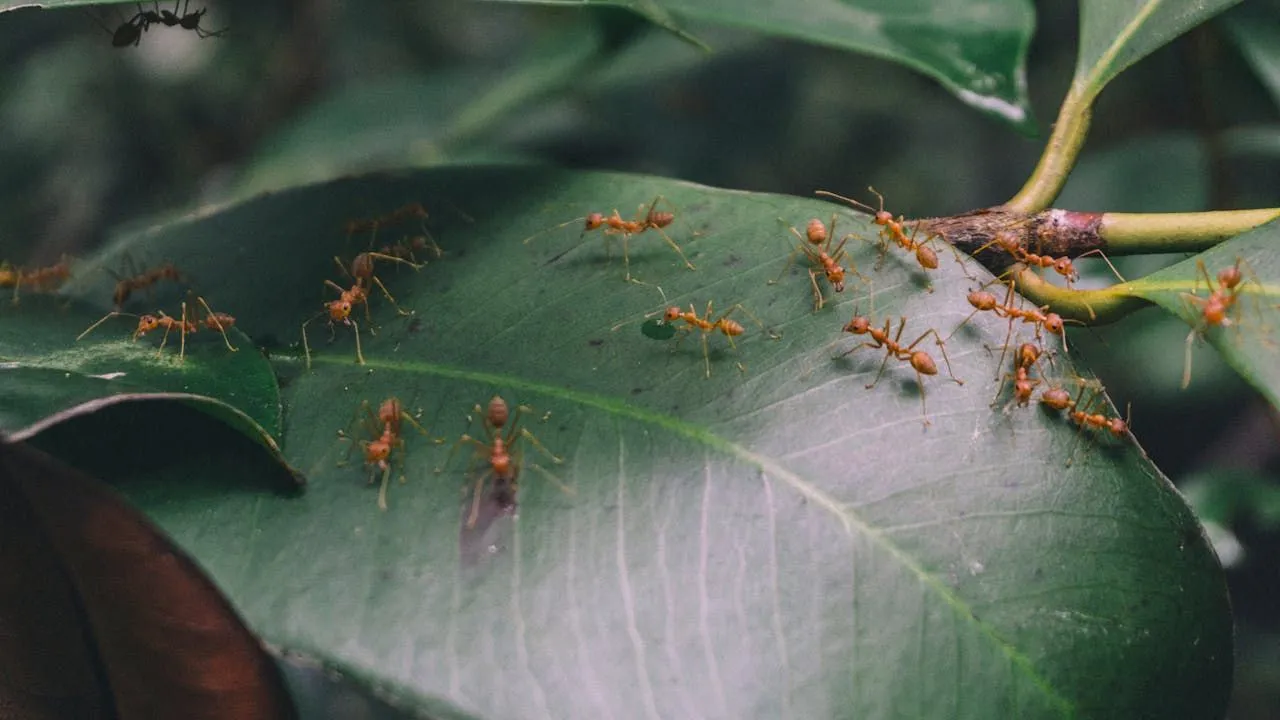
Comparison of Florida's Common Indoor Ants
| Species | Size | Color | Key Behavior | Control Approach |
|---|---|---|---|---|
| Fire ant | 1.6–5 mm | Reddish-brown | Aggressive stinging | Mound treatment + bait |
| Ghost ant | 1.3–1.5 mm | Dark head, pale body | Sweet food, moist areas | Sugar bait, non-repellent perimeter |
| Pharaoh ant | ~2 mm | Pale yellow | Budding, indoor nesting | Sugar bait only — no spray |
| Argentine ant | 2.2–2.8 mm | Dark brown | Supercolonies | Non-repellent spray + bait |
| Carpenter ant | 6–13 mm | Variable | Wood excavation | Perimeter + nest treatment |
| White-footed ant | 2.5–3 mm | Dark, pale feet | No trophallaxis | Perimeter spray focus |
Florida-Specific Control Considerations
Year-Round Pressure
Florida residents can't rely on cold winters to reduce ant pressure. Baiting, exclusion, and perimeter treatment need to be maintained year-round rather than seasonally. Increase treatment frequency during the rainy season (June through September), when ants displaced by flooding soil and saturated mulch push strongly indoors. See our post on ants and rain for more on this flood-displacement pattern.
Correct Species Identification First
Control approaches in Florida vary significantly by species. The most consequential mistake is applying repellent insecticides to pharaoh ants or ghost ants, which triggers colony budding. According to UF IFAS Extension, this single error is responsible for a large proportion of indoor ant control failures in the state. Always identify before treating — see our types of ants guide for help.
The Rainy Season Treatment Calendar
Florida's rainy season (roughly June through September) is the highest-pressure period for indoor ant incursions, and it calls for an adjusted treatment approach rather than the same routine used in drier months.
Before the rainy season begins in late May or early June:
- Inspect and treat fire ant mounds in the yard while soil is still dry enough for granular bait to work well. Wet soil reduces bait palatability.
- Apply a perimeter insecticide treatment around the foundation before heavy rain begins, when treated soil dries faster and application is more effective.
- Check and clear gutters and downspouts so they direct water well away from the foundation.
- Inspect crawlspace vents and ensure vapor barriers are intact, since high outdoor humidity during rainy season drives moisture into crawlspaces quickly.
During the rainy season:
- Expect increased indoor pressure from ghost ants, pharaoh ants, and pavement ants displaced by saturated soil. Refresh bait stations every three to five days rather than weekly.
- Reapply perimeter treatments within 48 hours after major storm events, which wash residual insecticide from treated surfaces.
- Check for new fire ant mounds appearing in previously treated areas — flood displacement can relocate entire colonies onto drier ground near structures.
According to UF IFAS Extension, proactive treatment before and during the rainy season produces dramatically better results than reactive treatment after ants have already entered the structure.
Moisture Management
Florida's humidity creates chronic moisture in crawl spaces, wall cavities, and around plumbing. This attracts ants — particularly carpenter ants and ghost ants — and supports the fungal decay that gives ants access to structural wood. Dehumidifiers in crawl spaces, proper gutter drainage, and vapor barriers under the structure are all critical components of ant prevention here.
The EPA recommends an integrated approach — exclusion, habitat modification, and targeted chemical treatment — as the most effective and lowest-risk strategy for residential ant control.
In my 15 years of pest management work across central Florida, I've treated virtually every species on this list. The call I dread most is the homeowner who has been spraying pharaoh ants for three months, convinced the problem is getting worse — and they're right, the spraying made it worse. Getting the identification right before treatment is the most important skill in Florida ant management, full stop.
Risk and Severity
Florida's warm climate supports year-round ant activity and hosts several high-risk species. Fire ant populations are dense statewide, and anaphylactic reactions to fire ant venom cause documented fatalities each year. Tawny crazy ants, established in parts of Florida, damage electrical equipment by nesting in junction boxes and causing short circuits. Pharaoh ants in Florida hospitals and care facilities carry verified pathogenic bacteria including Salmonella and Staphylococcus. Ghost ants and Argentine ants form large supercolonies that are exceptionally difficult to eliminate once established in structures. The absence of a true winter dormancy period means Florida infestations do not self-limit seasonally, making proactive year-round management essential.
Prevention
Florida homes require year-round prevention rather than seasonal treatment. Apply a non-repellent perimeter insecticide around the foundation every 60-90 days. Use broadcast fire ant bait across the lawn twice yearly, in spring and fall, before populations peak. Seal all foundation gaps, weep holes, and utility penetrations with silicone caulk. Pull mulch back from the foundation and keep vegetation trimmed away from the structure. In multi-unit buildings, coordinate pharaoh ant prevention across all units simultaneously, since these ants move freely through shared wall spaces. Inspect items brought into the home including potted plants, moving boxes, and outdoor furniture for hitchhiking ants. Address moisture issues promptly to avoid creating the damp conditions Florida ant species require for nesting.
Main Causes
Indoor ants activity typically traces to outdoor colonies in mulch beds, lawn soil, decking voids, or wall cavities near the foundation. Scouts enter through gaps under doors, foundation cracks, utility penetrations, and damaged weatherstripping when food residue, water from leaks, or warmth from heating runs is available inside. Pheromone trails reinforce within hours of a successful foraging trip, drawing dozens to hundreds of workers along the same route. Heavy rain, drought, or disturbance to an outdoor nest pushes whole colonies inside in pulses. Sweet residue on counters, unsealed pantry items, pet food bowls left out overnight, and leaking pipes are the most common triggers, and the closer an outdoor colony sits to the structure, the harder the pressure becomes to manage.
How to Identify
Confirm ants are present by tracking activity rather than relying on a single sighting. Look for steady two-way trails along baseboards, counter edges, window frames, and utility penetrations, and follow the trail back to where it enters the structure. Size, color, and antennae shape distinguish the species: tiny dark ants attracted to sweet residue are usually odorous house ants or Argentine ants, large black ants near sawdust point to carpenter ants, tiny pale yellow ants scattered throughout a building indicate Pharaoh ants, and red dome mounds outdoors signal fire ants. Place a drop of honey or peanut butter near suspected activity and check at thirty minutes; aggregation around the bait confirms the species and food preference.
Solutions and Actions
Effective ant control combines bait, perimeter exclusion, and sanitation rather than relying on contact sprays. Identify the species first because bait selection depends on the colony's current dietary preference — sweet baits for odorous house ants and Argentine ants, protein-based or grease baits for thief ants, multi-bait stations for opportunistic species. Place bait stations directly on active trails, not in random locations, and allow workers to carry the slow-acting active ingredient back to the colony untouched — avoid spraying anywhere near bait. Treat outdoor satellite nests within twenty feet of the structure with a non-repellent residual. Seal entry points only after bait has had time to reach the colony, otherwise foragers seal their access while the colony continues producing replacements.
Frequently Asked Questions
What is the most destructive ant in Florida?
Carpenter ants cause the most structural damage to buildings, while fire ants present the most serious health risk to people and animals outdoors. From an ecological standpoint, invasive species like Argentine ants, tawny crazy ants, and big-headed ants cause widespread displacement of native species.
Why do I keep getting ants in my Florida home?
Florida's climate means ants forage year-round, and the high ant diversity here means multiple species may be targeting your home simultaneously. Moisture is typically the main driver — fix leaks and reduce humidity around the foundation. See why ants come inside for a full breakdown of attractants.
Does fire ant bait work on other species?
Most fire ant baits are formulated specifically for Solenopsis species and are not effective against pharaoh ants, ghost ants, or Argentine ants. Always match the bait formulation to the species you're treating.
Why are ant problems so persistent in Florida homes?
Florida's warmth, humidity, irrigation, and long growing season let many ant species forage and reproduce nearly year-round. Outdoor colonies also stay close to homes because landscaping, mulch, and moisture around foundations provide ideal nesting conditions.
Continue reading:
The Complete Guide to Ants: Identification, Prevention & Removal →Sources & Further Reading
- Ants — Pest Notes — University of California Statewide IPM Program
- Texas Imported Fire Ant Project — Texas A&M AgriLife Extension
- Controlling Pests Safely — U.S. Environmental Protection Agency